
Author: The Officel Editorial Team

  • Spring Office Outfits for Men: What to Wear to Work in Spring

    Spring Office Outfits for Men: What to Wear to Work in Spring

    What are the best spring office outfits for men? Spring is the transition from winter’s heavy layers to lighter fabrics and fresher colors. For men’s professional dress, spring means swapping heavy wool for lighter blends, introducing spring color palettes, and layering for variable temperatures. These spring workwear formulas work for business casual and business professional environments.

    • Spring 2026 workwear color palettes for men
    • Best spring office outfit formulas for men
    • How to transition from winter to spring work wardrobe
    • Spring transitional layering strategy for men
    • Key spring workwear pieces for men

    What Are the Best Spring Workwear Colors for Men in 2026?

    The most professional spring color palette for men: navy (works year-round but feels fresh in spring with lighter fabrics), olive and tan (excellent spring chino colors), warm grey (lightens up from winter charcoal), light blue (shirt and chino colors), and camel (classic spring jacket and coat color). Spring color strategy: keep suits and blazers in conservative navy or grey but introduce spring through chinos in lighter tones, shirts in light blue or pale pink, and accessories (pocket square, tie) in spring colors like soft burgundy or sage green.

    Best Spring Office Outfit Formulas for Men

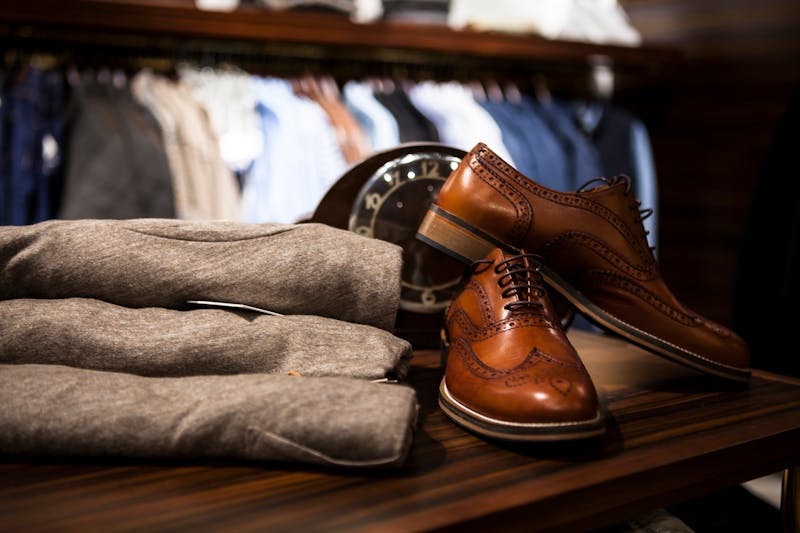
    Top spring business casual outfits for men: (1) Camel or tan chinos + light blue Oxford shirt + navy blazer + brown leather loafers – the quintessential spring business casual look; (2) Light grey trousers + white or pale pink Oxford shirt + navy linen blazer + brown Derby shoes; (3) Olive chinos + fine-knit navy crewneck + no blazer (warmer spring days) + tan leather loafers; (4) Navy suit in lighter weight wool + white shirt + no tie (business casual spring meetings). The key spring upgrade for men: swap a heavy wool blazer for a lightweight linen or cotton blazer in navy or camel.

    How to Transition Your Work Wardrobe from Winter to Spring

    The practical spring wardrobe transition for men: move heavy overcoat to back of wardrobe, bring out the trench coat or lightweight mac; swap winter-weight wool suits for lighter wool or wool-blend suits; replace chunky knitwear with fine merino or cotton crewnecks; introduce lighter chino colors (tan, light grey, olive) to replace dark winter chinos; swap heavy leather boots for lighter Derby shoes or loafers. Don’t put winter clothes away completely until May – spring mornings can still be cold in most climates.

    Spring Transitional Layering for Men

    Spring weather is unpredictable: cold mornings, warm afternoons, variable throughout the week. The best spring layering approach for men: a lightweight linen or cotton blazer as the primary layer (works from cool mornings to warm afternoons), a quality trench coat for rainy days (the most useful spring outerwear), and a fine-knit merino crewneck or cardigan that works under or without the blazer. Avoid very heavy blazers and knitwear from April onwards – the temperature differential between morning commute and afternoon in the office is better managed with lightweight, removable layers.

    Related Articles

    Related OfficeL guide: Casual Friday Outfit Ideas: What to Wear on Dress-Down Day

    Next step: Planning your interview outfit? Bookmark this guide and share it with a friend who has an interview coming up.

    Shop the Look

    Looking for outerwear, suits and footwear? Here are our top picks for the office:

    We may earn a commission from purchases made through these links at no extra cost to you. This helps us keep The Officel free.

    Get the Free Office Dress Code Cheat Sheet

    Join our newsletter and get a printable guide to every office dress code – from business formal to casual Friday.


    Download the Free Guide →


    You Might Also Like

  • Work From Home Outfit Ideas: What to Wear for Video Calls

    Work From Home Outfit Ideas: What to Wear for Video Calls

    Work outfit ideas? This guide updates work from home outfit ideas: what to wear for video calls to match high-intent search phrasing discovered from YouTube autocomplete and public question research.

    What should you wear when working from home? The rise of Hybrid Work Outfits: What to Wear for WFH and Office Days has created a new category of professional dressing: the video call outfit. You need to look credible and professional on camera while also being comfortable enough to work from home all day. These work-from-home outfit formulas solve both.

    • Why what you wear working from home still matters
    • Best video call outfit formulas for women
    • Best video call outfit formulas for men
    • What looks best on camera (and what to avoid)
    • The psychology of dressing well when working remotely

    Why Does What You Wear Working From Home Still Matter?

    Research consistently shows that what you wear affects how you feel and perform – even when no one else can see your full outfit. The “enclothed cognition” effect: formal clothing activates more abstract, strategic thinking; casual clothing increases comfort but can reduce focus. Practically: you will have video calls where colleagues, clients, and management see you on camera. Your visible appearance in those calls affects how you are perceived professionally. The minimum: look credible from the shoulders up on any video call.

    Best Video Call Outfit Ideas for Women

    Top work-from-home video call outfit formulas for women: (1) A structured blazer or cardigan over a simple top – the easiest video call upgrade; (2) A quality blouse in a solid color or simple print – reads as professional and intentional on camera; (3) A casual midi dress (comfortable) topped with a blazer or structured layer for calls; (4) Fine-knit sweater in a flattering color – comfortable, professional-looking, and camera-friendly. Camera tip: solid colors and simple patterns look best on camera; very busy prints or very fine patterns can look distorted on video.

    Best Video Call Outfit Ideas for Men

    Top work-from-home video call outfit formulas for men: (1) A quality crewneck or V-neck sweater in navy, grey, or camel – the most versatile remote work layer; (2) A casual Oxford shirt (no tie needed) – standard professional on camera; (3) A blazer over a quality t-shirt – elevates immediately for important calls; (4) A quality polo shirt in a solid color. Camera tip: avoid white shirts close to your face in poor lighting (washes out); navy, grey, and rich colors read better on most laptop cameras. Avoid very bold stripes that can create moiré patterns on camera.

    What Looks Best on Camera for Video Calls?

    Camera-optimized professional dress: solid colors in medium tones (navy, charcoal, burgundy, forest green, dusty rose) read best on most cameras; avoid pure white (overexposes in bright light) and pure black (loses detail in dim light); avoid very fine patterns (pinstripes, herringbone) that create visual noise on compressed video; matte fabrics look more professional than shiny or silky fabrics in most lighting; layering (blazer over shirt/blouse) creates visible structure and professional signal even from the shoulders up.

    The Psychology of Dressing Well While Working Remotely

    The most practical reason to maintain professional dress when working from home: consistency. People who dress deliberately for remote work report higher focus, clearer professional identity, and stronger work-home boundary (it’s easier to switch off when you change out of work clothes). The work-from-home dress minimum: have a deliberate “work” outfit that is distinct from your weekend casual wear, even if both are comfortable. This doesn’t mean a full suit – quality casual wear worn intentionally is sufficient. The act of changing into work clothes is a productive ritual signal.

    Related Articles

    See also: What to Wear on a Video Call: The Complete Guide

    Related OfficeL guide: Casual Friday Outfit Ideas: What to Wear on Dress-Down Day

    Next step: Want more business casual inspiration? Browse our complete workwear collection for daily office outfit ideas.

    Shop the Look

    Looking for dresses, outerwear and tops? Here are our top picks for the office:

    We may earn a commission from purchases made through these links at no extra cost to you. This helps us keep The Officel free.

    Get the Free Office Dress Code Cheat Sheet

    Join our newsletter and get a printable guide to every office dress code – from business formal to casual Friday.

    Download the Free Guide →


    You Might Also Like

  • Casual Friday Dress Code: What to Wear and What to Avoid

    Casual Friday Dress Code: What to Wear and What to Avoid

    What does casual Friday mean? Casual Friday (sometimes called dress-down Friday) is a workplace policy that relaxes the dress code on Fridays – typically allowing employees to wear more casual clothing than the rest of the working week. But “casual” varies enormously by company, and the wrong casual Friday outfit can undermine your professional image. This guide covers casual Friday rules for every type of workplace.

    • What casual Friday actually means in different workplaces
    • Casual Friday outfit ideas for corporate offices
    • Casual Friday outfit ideas for business casual offices
    • What not to wear on casual Friday
    • When casual Friday rules don’t apply

    What Does Casual Friday Mean in a Corporate Office?

    In a corporate (business professional) environment, casual Friday typically means business casual – blazer optional, but still tailored trousers, formal shirts or blouses, and polished shoes. It does NOT mean jeans and a t-shirt. Think: the outfit you’d wear to a smart restaurant on a weekend, not what you’d wear to run errands. Typical corporate casual Friday: chinos + Oxford shirt (no tie) + loafers (men); tailored trousers + quality blouse or fine knit (women). The rule: remove one formal element from your usual outfit, not all of them.

    What Does Casual Friday Mean in a Business Casual Office?

    In a business casual office, casual Friday often means smart casual – clean jeans are typically allowed (dark wash, no distressing), quality t-shirts or polo shirts may replace formal shirts, and more casual shoes (clean leather sneakers, quality loafers) are acceptable. The key distinction: quality and intention. A well-fitting pair of dark jeans + a quality polo or casual button-down + clean leather sneakers is appropriate. Worn, torn, or very casual items still cross the line. The casual Friday test: would you be embarrassed if a client unexpectedly visited?

    Best Casual Friday Outfit Ideas for Men

    Top casual Friday outfits for men: (1) Dark jeans + quality polo or casual Oxford shirt + clean leather sneakers or loafers – the classic casual Friday look; (2) Chinos in a casual color (olive, khaki) + casual button-down (chambray or linen) + loafers; (3) Dark jeans + fine-knit sweater + Chelsea boots (slightly elevated but still casual-Friday-appropriate). Avoid: athletic wear, cargo pants, hoodies (unless in a very casual tech environment), worn or dirty shoes, and graphic t-shirts in most corporate contexts.

    Best Casual Friday Outfit Ideas for Women

    Top casual Friday outfits for women: (1) Dark jeans + quality blouse or silk t-shirt + ankle boots or loafers; (2) Casual midi dress (linen or cotton, more relaxed print) + flat sandals or loafers; (3) Quality jumper or fine-knit + straight-leg trousers + trainers or flats. The casual Friday upgrade: swap your formal blazer for a quality unstructured jacket or quality knitwear. Keep footwear professional – even on casual Friday, very casual sandals or worn trainers undermine the look.

    When Do Casual Friday Rules NOT Apply?

    Casual Friday dress rules don’t apply when: (1) You have client meetings on Friday – dress to the client’s standard, not your office’s casual Friday standard; (2) You have a job interview – always wear standard business attire regardless of the day; (3) Important internal presentations or board-level meetings on Friday; (4) Your office explicitly announces a dress-up occasion on a Friday. The principle: casual Friday is about comfort in your environment, not about dressing inappropriately for the most important interaction happening that day.

    Related Articles

    Related OfficeL guide: Casual Friday Outfit Ideas: What to Wear on Dress-Down Day

    Next step: Planning your interview outfit? Bookmark this guide and share it with a friend who has an interview coming up.

    Shop the Look

    Looking for dresses, footwear and tops? Here are our top picks for the office:

    We may earn a commission from purchases made through these links at no extra cost to you. This helps us keep The Officel free.

    Get the Free Office Dress Code Cheat Sheet

    Join our newsletter and get a printable guide to every office dress code – from business formal to casual Friday.

    Download the Free Guide →


    You Might Also Like

  • Men’s Interview Outfits: What to Wear to a Job Interview

    Men’s Interview Outfits: What to Wear to a Job Interview

    What should men wear to a job interview? The answer depends on the company and role – but there are reliable formulas that work for every interview context, from investment banking to startup casual. This guide covers men’s interview outfits for every situation.

    • The general rule for men’s interview dress
    • Interview outfits for formal corporate roles (finance, law)
    • Interview outfits for business casual companies
    • Interview outfits for tech and startup interviews
    • What NOT to wear to a job interview as a man

    What Is the Right Dress Code for a Men’s Job Interview?

    The rule for men’s interview dress: dress one level above the company’s everyday standard. If the company is business casual, wear business professional (blazer + formal trousers + dress shoes, possibly a suit). If the company is smart casual, wear business casual. If the company is formal (investment bank, law firm), wear business formal (full suit + tie). When uncertain about the company’s standard, err toward more formal – being slightly overdressed for an interview is far better than being underdressed. Research LinkedIn and the company website for clues about actual dress standards.

    Men’s Interview Outfits for Finance and Law

    For investment banking, corporate law, management consulting, and senior corporate roles: wear a full suit. Navy or charcoal suit in wool or wool blend, white or light blue formal shirt, conservative tie (stripe or geometric), polished black Oxford or Derby shoes, dark dress socks, and a leather belt matching the shoe color. Hair should be clean and neat. Avoid: overly flashy ties, pocket squares (optional – if used, keep simple), and any casual elements. This outfit signals you understand the formal professional culture you are entering.

    Men’s Interview Outfits for Business Casual Companies

    For most corporate roles, marketing, PR, professional services, and mid-size companies: a blazer with formal trousers (not a full matched suit) is typically appropriate. Options: navy blazer + grey chinos + white Oxford shirt + brown leather Derby shoes or loafers; charcoal trousers + light blue Oxford shirt + navy blazer + leather shoes. Tie is optional – read the company’s culture. This look is professional without being overdressed for a business casual environment. A suit jacket as a blazer with non-matching trousers is more flexible than a matched suit for this interview context.

    Men’s Interview Outfits for Tech and Startup Interviews

    For tech companies, startups, and creative agencies: smart casual to business casual. Options: dark jeans or chinos + quality Oxford shirt or quality polo + clean leather sneakers or loafers; or add a blazer if you want to elevate. Avoid: a full suit (too formal, signals misalignment with culture), and casual casual (hoodies, graphic tees – too casual for most interview contexts even at startups). The goal is to look put-together and thoughtful without appearing corporate-formal in an environment that values authenticity.

    Related Articles

    Related OfficeL guide: Casual Friday Outfit Ideas: What to Wear on Dress-Down Day

    Next step: Planning your interview outfit? Bookmark this guide and share it with a friend who has an interview coming up.

    Shop the Look

    Looking for dresses, footwear and suits? Here are our top picks for the office:

    We may earn a commission from purchases made through these links at no extra cost to you. This helps us keep The Officel free.

    Get the Free Office Dress Code Cheat Sheet

    Join our newsletter and get a printable guide to every office dress code – from business formal to casual Friday.

    Download the Free Guide →


    You Might Also Like

  • Business Formal Dress Code for Men: What to Wear and When

    Business Formal Dress Code for Men: What to Wear and When

    business casual for men fall? This guide updates business formal dress code for men: what to wear and when to match high-intent search phrasing discovered from YouTube autocomplete and public question research.

    What does business formal mean for men? Business formal is the strictest professional dress code in corporate environments – required in investment banking, corporate law, formal client meetings, board presentations, and senior government contexts. This guide covers exactly what business formal means, what to wear, and when it applies.

    • What business formal dress code means for men
    • Complete business formal outfit components
    • Business formal suit guide: fabrics, colors, and fit
    • Business formal shirt and tie requirements
    • Business formal shoes and accessories

    What Is Business Formal Dress Code for Men?

    Business formal (also called business professional or corporate dress code) requires a full suit: a matched jacket and trousers in the same fabric and color. A tie is typically required in business formal environments. Business formal applies in: investment banking front office, corporate law firms, formal client presentations, board meetings, court appearances, senior government roles, and formal interviews for roles in these sectors. The standard is visually distinct from business casual – you will not see unbuttoned collars or casual shoes.

    Business Formal Suit Guide: Colors, Fabrics, and Fit

    The best business formal suits by priority: Navy (the most versatile business formal suit – works for any corporate environment); Charcoal grey (second most versatile – slightly more conservative, excellent for finance and law); Mid-grey (lighter grey, slightly less formal, appropriate in most formal environments); Black (the most formal, reserved for very senior presentations or semi-formal events). Fabrics: pure wool or wool blends are the only appropriate business formal suit fabrics. Fit: jacket should fit at the shoulders (the most important measurement), with sleeve length showing 1cm of shirt cuff, and trouser break at the top of the shoe.

    Business Formal Shirt and Tie Requirements

    Business formal shirts: white is the most formal and appropriate for any situation; light blue is the most common everyday business formal option; very pale pink or pale yellow are acceptable in most formal environments; no patterns stronger than subtle stripes or fine checks. All formal shirts must have spread or semi-spread collars – casual button-down collar shirts are not appropriate for business formal. Ties: silk is the standard fabric; conservative patterns (striped, geometric, solid) are appropriate; width should be proportional to lapel width (typically 2.5-3 inches). Windsor or half-Windsor knot for formal situations.

    Business Formal Shoes for Men

    The hierarchy of business formal shoes: Oxford shoes (cap toe or plain toe in black or dark brown) – the most formal option; Derby shoes in black – slightly less formal but appropriate in most business formal contexts; Monk strap shoes in black – formal with a distinctive aesthetic; Chelsea boots in black (acceptable in most business formal contexts). Black leather is the most appropriate for the most formal situations (investment banking, senior meetings); dark brown works in less strict business formal contexts. Polish and maintain formal shoes regularly – worn-looking shoes undermine a business formal look regardless of quality.

    Related Articles

    Related OfficeL guide: Casual Friday Outfit Ideas: What to Wear on Dress-Down Day

    Next step: Planning your interview outfit? Bookmark this guide and share it with a friend who has an interview coming up.

    Shop the Look

    Looking for dresses, footwear and suits? Here are our top picks for the office:

    We may earn a commission from purchases made through these links at no extra cost to you. This helps us keep The Officel free.

    Get the Free Office Dress Code Cheat Sheet

    Join our newsletter and get a printable guide to every office dress code – from business formal to casual Friday.

    Download the Free Guide →


    You Might Also Like

  • Professional Dress Code Checklist: Pre-Work Outfit Guide

    Professional Dress Code Checklist: Pre-Work Outfit Guide

    Professional dress code? This guide updates professional dress code checklist: pre-work outfit guide to match high-intent search phrasing discovered from YouTube autocomplete and public question research.

    Use this professional dress code checklist to ensure your work outfit is appropriate for any professional situation. Save or bookmark this page for quick reference before important work occasions.

    • Daily business casual outfit checklist
    • Business professional/formal outfit checklist
    • Job interview outfit checklist
    • Client meeting outfit checklist
    • Work event/office party checklist

    Daily Business Casual Outfit Checklist

    Before leaving for work in a business casual environment, confirm:

    • Clothing is clean and free of stains or odors
    • All items are wrinkle-free (steamed or ironed)
    • No visible tears, worn areas, or pilling on fabric
    • Clothes fit properly (not too large or too tight)
    • Shoes are clean and in good repair (no worn heels)
    • No athletic wear, gym clothes, or casual loungewear
    • Appropriate for your specific workplace culture

    Business Professional/Formal Outfit Checklist

    For business professional or business formal situations:

    • Blazer or suit jacket is structured and properly fitted
    • Shirt or blouse is freshly pressed with no collar wrinkles
    • Trousers or skirt are formal (not chinos or casual fabrics)
    • Shoes are polished and appropriate (leather or quality suede)
    • Accessories are minimal and professional
    • No visible tattoos in very formal contexts (check company policy)
    • Hair is neat and professionally styled

    What Is the Most Important Item to Check Before a Job Interview?

    Before a job interview, check your shoes first. Shoes are the most noticed element of a professional outfit and the hardest to compensate for if wrong. After shoes: check your blazer or jacket fits properly at the shoulders and sleeves. Then verify everything is pressed – wrinkled interview clothing is one of the most common and easily avoidable mistakes. If in doubt about the company’s dress code, dress one level above what you expect their standard to be.

    Client Meeting Outfit Checklist

    For client-facing meetings:

    • Dress to match or slightly exceed the client’s expected standard
    • Confirm you know the client’s industry dress standard before meeting
    • Avoid strong cologne or perfume (some people are sensitive)
    • Carry a professional bag (not a worn backpack for formal meetings)
    • Business cards, notepad, or device are accessible without digging

    Office Party or Work Event Checklist

    For office social events:

    • More festive than work attire, but still professional
    • Avoid overly revealing clothing even at casual events
    • Comfortable shoes you can stand in for 2-3 hours
    • Nothing that could be misinterpreted or draw negative attention

    Related Dress Code Guides

    Frequently Asked Questions

    What is the most important rule for professional dress code checklist: your complete pre-work outfit guide?

    Fit is the single most important factor. A well-fitted outfit in a simple style always looks more professional than an expensive, poorly-fitted one. Get key pieces tailored if needed.

    How much should you spend on a professional wardrobe?

    For a starter professional wardrobe, aim for 10 versatile pieces in neutral colors that mix and match well. Quality over quantity – 2-3 well-made basics outperform 10 cheap trendy items.

    What’s the fastest way to elevate a basic office outfit?

    Add a structured blazer, switch to leather or quality shoes, and ensure everything is pressed and clean. These three changes transform any basic outfit into a polished professional look.

    Related OfficeL guide: Casual Friday Outfit Ideas: What to Wear on Dress-Down Day

    Next step: Planning your interview outfit? Bookmark this guide and share it with a friend who has an interview coming up.

    Shop the Look

    Looking for dresses, footwear and outerwear? Here are our top picks for the office:

    We may earn a commission from purchases made through these links at no extra cost to you. This helps us keep The Officel free.

    Get the Free Office Dress Code Cheat Sheet

    Join our newsletter and get a printable guide to every office dress code – from business formal to casual Friday.

    Download the Free Guide →


    You Might Also Like

  • Office-Appropriate Summer Dresses: What Works and What Doesn’t

    Office-Appropriate Summer Dresses: What Works and What Doesn’t

    What makes a summer dress office-appropriate? Dresses are one of the most practical summer work outfits for women – they’re cooler than separates and require no matching. But not all summer dresses meet professional standards. This guide covers exactly what makes a dress work-appropriate.

    • What makes a summer dress office-appropriate
    • Best dress styles for business casual offices
    • Summer dress lengths for professional environments
    • Best fabrics for office summer dresses
    • How to style a summer dress for different dress codes

    What Makes a Dress Office-Appropriate in Summer?

    An office-appropriate summer dress meets four criteria: appropriate length (at or below the knee for business professional; at the knee or midi for business casual), appropriate neckline (no deep V-necks, no strapless, no very low backs), appropriate fabric (structured enough to look professional – linen, quality cotton, ponte, or jersey; not sheer or very clingy), and appropriate fit (well-fitted but not skin-tight). A dress that meets all four criteria works in most business casual and business professional environments.

    Best Summer Dress Styles for Business Casual Offices

    The most reliable summer dress styles for business casual work: Sheath dress (the most versatile professional dress – structured, knee-length, works with or without a blazer); Shirt dress in linen or quality cotton (relaxed but structured, very appropriate for business casual); Wrap dress in a structured fabric (adjustable, comfortable, professional across sizes); A-line midi dress (feminine and professional, particularly in solid colors or understated prints); Linen column dress (modern and minimal, very professional in lightweight fabrics). Avoid: bodycon dresses (too fitted for most professional contexts), very flowy sundresses (too casual), maxi dresses (unless at the very formal and structured end).

    Summer Dress Length Rules for Professional Environments

    Professional dress lengths: Business formal – at or below the knee; Business casual – at the knee to mid-calf (midi); Smart casual – knee to midi. Above-the-knee dresses (mini length) are not appropriate in business casual or more formal environments. Very long maxi dresses work in creative or relaxed smart casual environments but can look too casual in business casual settings unless the dress is structured and formal in silhouette. The midi length (mid-calf) is the most universally appropriate and currently fashionable professional length.

    How to Style a Summer Dress for Different Dress Codes

    The same summer dress can work across dress code levels with the right styling: For business professional: add a structured blazer in a complementary color, change to closed-toe pumps or formal flats. For business casual: wear with a light blazer or structured cardigan, add loafers or ankle-strap heels. For smart casual: wear without a blazer, add sandals or clean leather sneakers. A quality midi dress in navy or black with a blazer layer is the most versatile professional summer outfit – it works at three different dress code levels with minimal changes.

    Related Articles

    Related OfficeL guide: Casual Friday Outfit Ideas: What to Wear on Dress-Down Day

    Next step: Want more business casual inspiration? Browse our complete workwear collection for daily office outfit ideas.

    Shop the Look

    Looking for dresses, footwear and outerwear? Here are our top picks for the office:

    We may earn a commission from purchases made through these links at no extra cost to you. This helps us keep The Officel free.

    Get the Free Office Dress Code Cheat Sheet

    Join our newsletter and get a printable guide to every office dress code – from business formal to casual Friday.

    Download the Free Guide →


    You Might Also Like

  • Summer Office Outfits: What to Wear to Work in Hot Weather

    Summer Office Outfits: What to Wear to Work in Hot Weather

    What should you wear to work in summer? Dressing professionally in hot weather has unique challenges: staying cool during the commute, managing intense air-conditioning in offices, and maintaining a polished appearance in humid conditions. These summer office outfit formulas solve all three.

    • Best fabrics for summer office outfits
    • Summer business casual outfit ideas for women
    • Summer business casual outfit ideas for men
    • How to dress for air-conditioned offices in summer
    • What to avoid wearing in summer professional environments

    What Are the Best Fabrics for Summer Office Outfits?

    The best professional fabrics for summer: Linen (breathable, looks effortlessly professional in summer, wrinkles quickly – acceptable in most business casual environments but less suitable for business professional); Quality cotton (lightweight dress shirts, trousers, and blouses work well in summer); Lightweight wool blends (counterintuitively, fine lightweight wool ventilates well and resists odor – ideal for warm-weather professional dress); Silk and silk blends (cool, professional, works for blouses and dresses); Avoid: polyester and synthetic blends which trap heat, and heavy wool which is uncomfortably hot in summer.

    Summer Business Casual Outfits for Women

    Best summer business casual formulas for women: (1) Linen blazer (or no blazer) + quality cotton or silk blouse + linen or lightweight cotton trousers + loafers or sandals; (2) Midi linen or cotton dress + lightweight blazer layer (for office air conditioning) + flat sandals or loafers; (3) Wide-leg light-fabric trousers + sleeveless quality blouse + kitten-heel mules; (4) Cotton pencil skirt + silk or quality cotton blouse + kitten heels. Key summer workwear pieces: a linen blazer (essential for air-conditioned offices), silk or quality cotton sleeveless blouses, and comfortable flat professional sandals.

    Summer Business Casual Outfits for Men

    Best summer business casual formulas for men: (1) Linen or lightweight cotton chinos + quality short-sleeve polo (in business casual environments that accept polo shirts) or lightweight long-sleeve Oxford shirt + loafers; (2) Lightweight wool or tropical-weight suit trousers + quality cotton shirt + leather loafers; (3) Navy chinos + linen shirt + leather loafers – the quintessential summer business casual combination. Essential summer workwear: lightweight wool or cotton-linen blend trousers (far superior to polyester in heat), quality cotton Oxford shirts in lighter colors, and leather loafers (cooler than closed Derbies or Oxfords).

    How to Dress for Air-Conditioned Offices in Summer

    The summer dress challenge for office workers: hot outside, freezing inside. The solution: layers that work in both environments. Carry (or keep at your desk) a light blazer or structured cardigan that you put on when inside and remove when outside. For women: a sleeveless professional dress plus a blazer covers both environments. For men: a quality long-sleeve shirt handles most office temperatures – keep a thin merino layer for particularly cold offices. Avoid very heavy blazers in summer – a lightweight linen or cotton-blend blazer manages both hot and cold environments effectively.

    Related Articles

    Related OfficeL guide: Casual Friday Outfit Ideas: What to Wear on Dress-Down Day

    Next step: Want more business casual inspiration? Browse our complete workwear collection for daily office outfit ideas.

    Shop the Look

    Looking for dresses, tops and outerwear? Here are our top picks for the office:

    We may earn a commission from purchases made through these links at no extra cost to you. This helps us keep The Officel free.

    Get the Free Office Dress Code Cheat Sheet

    Join our newsletter and get a printable guide to every office dress code – from business formal to casual Friday.
    Download the Free Guide →


    You Might Also Like

  • Office Dress Code by Industry: What to Wear in Finance, Tech, and More

    Office Dress Code by Industry: What to Wear in Finance, Tech, and More

    What is the dress code in your industry? Office dress standards vary dramatically by sector – finance and law are significantly more formal than technology and creative industries. This comprehensive guide covers the actual dress expectations across 7 major professional industries.

    • Finance and banking dress code: business formal to professional
    • Law firm dress code: business professional
    • Technology and startup dress code: smart casual to casual
    • Consulting dress code: client-dependent
    • Creative industries dress code: smart casual
    • Healthcare professional dress code
    • Government and public sector dress code

    What Is the Dress Code in Finance and Banking?

    Finance and banking maintain the most formal dress standards of any industry in 2026. Investment banking: business formal to business professional – suits are still the daily standard at Goldman Sachs, JPMorgan, Morgan Stanley, and comparable firms. Commercial and retail banking: business professional for client-facing roles, business casual for back-office. Asset management and private equity: business professional with suits for meetings. The overall principle: when managing other people’s money, appearing formal and trustworthy matters.

    What Is the Dress Code at Law Firms?

    Law firms maintain business professional as the standard, with business formal for court and formal client meetings. The dress standard varies somewhat by practice area: corporate M&A and finance lawyers dress most formally; litigation lawyers dress to court standards; employment and family lawyers may be slightly more relaxed in internal environments. BigLaw (the largest firms) maintains stricter standards than boutique firms. The universal law firm principle: when in doubt, dress up. Being underdressed in front of a client is a serious professional error in legal culture.

    What Is the Dress Code in Technology Companies?

    Tech companies have the most variable dress codes of any industry: Big Tech companies (Google, Meta, Amazon, Apple, Microsoft) are smart casual to casual – quality t-shirts, chinos, clean sneakers are the everyday reality. Enterprise software companies (Salesforce, Oracle, SAP) are often business casual. Startups follow the founding team’s culture but are generally smart casual to casual. The tech industry’s casual culture reflects its rejection of traditional corporate hierarchy rather than a lack of standards – clothing should still look intentional and quality.

    What Is the Dress Code in Management Consulting?

    Consulting dress is client-dependent, which makes it uniquely complex. McKinsey, BCG, and Bain consultants dress to match (or slightly exceed) their client’s standard. In a banking client: business formal. In a tech client: business casual. On internal days: business casual or smart casual depending on firm culture. The consulting principle: mirror your client’s environment, but never underdress relative to them. Always have business professional options available in your travel kit.

    What Is the Dress Code in Creative Industries?

    Creative industries (advertising, design, fashion, media, publishing) operate on a smart casual to smart standard. Personal style and aesthetic awareness are valued in creative environments – looking visually intentional and stylish matters more than formal dress. Quality streetwear, interesting layering, and individual expression are accepted and even expected. The key distinction: creative casual means deliberate and quality, not just comfortable. Being under-dressed in a creative agency can signal lack of visual judgment, which matters in those professions.

    Related Articles

    Related OfficeL guide: Casual Friday Outfit Ideas: What to Wear on Dress-Down Day

    Next step: Want more business casual inspiration? Browse our complete workwear collection for daily office outfit ideas.

    Shop the Look

    Looking for dresses, suits and footwear? Here are our top picks for the office:

    We may earn a commission from purchases made through these links at no extra cost to you. This helps us keep The Officel free.

    Get the Free Office Dress Code Cheat Sheet

    Join our newsletter and get a printable guide to every office dress code – from business formal to casual Friday.

    Download the Free Guide →


    You Might Also Like

  • Business Casual Shoes for Men: The Best Work Shoes Guide

    Business Casual Shoes for Men: The Best Work Shoes Guide

    Business casual for men fall? This guide updates business casual shoes for men: the best work shoes guide… to match high-intent search phrasing discovered from YouTube autocomplete and public question research.

    What are the best business casual shoes for men? Men’s professional footwear is one of the most noticed elements of a work outfit – the right shoes elevate everything above them; the wrong shoes undermine an otherwise good look. This guide covers the best business casual shoe styles, what to avoid, and how to invest.

    • Best business casual shoe styles for men
    • Oxford shoes vs Derby shoes: when to wear each
    • Are loafers business casual?
    • Can you wear sneakers to a business casual office?
    • How much to spend on work shoes

    What Are the Best Business Casual Shoe Styles for Men?

    The best business casual shoes for men, ranked by versatility: (1) Leather Derby shoes (most versatile – works from business casual to business professional); (2) Leather loafers, specifically penny or bit loafers (slightly more casual than Derbies but appropriate in all business casual environments); (3) Leather Chelsea boots (seasonal, works particularly well in autumn/winter); (4) Leather monk strap shoes (more distinctive, works in business casual); (5) Clean leather or suede sneakers from quality brands (Common Projects, Veja, New Balance 990) – acceptable at the relaxed end of business casual and smart casual environments only.

    Oxford Shoes vs Derby Shoes: The Key Difference

    Oxford shoes have closed lacing (the lace eyelets are sewn under the vamp) – they are more formal and appropriate for business formal to smart business casual. Derby shoes have open lacing – slightly less formal but appropriate across business casual environments and even the formal end of smart casual. For most business casual environments, Derby shoes are the better choice – more comfortable and versatile. For business formal or client-facing corporate situations, Oxfords are the more appropriate choice.

    Are Loafers Appropriate for Business Casual?

    Yes – loafers are fully appropriate for business casual environments. Penny loafers and bit loafers in quality leather work in all business casual settings. Tassel loafers are slightly more casual but still appropriate. Driving loafers (very casual rubber-soled loafers) are not appropriate for professional environments. Suede loafers are more casual than leather but still work in business casual and smart casual environments. Loafers work particularly well with chinos, tailored trousers, and midi or maxi skirts.

    How Much Should You Spend on Business Casual Shoes?

    Budget $80-200 for quality business casual shoes that last 3-5+ years with proper care. Below $80: quality drops significantly, shoes look cheap, and wear out within 12-18 months. $80-150: best value range – Clarks, ALDO, Steve Madden, and Thursday Boot Co. offer good quality here. $150-300: significant quality jump – Loake, Tricker’s, Allen Edmonds. Above $300: Goodyear welt construction, resoleable, potentially lifetime investment. Key maintenance: cedar shoe trees (extend lifespan dramatically), leather conditioner every 3-4 months, resoling at a cobbler rather than replacing.

    Related Articles

    Related OfficeL guide: Casual Friday Outfit Ideas: What to Wear on Dress-Down Day

    Next step: Want more business casual inspiration? Browse our complete workwear collection for daily office outfit ideas.

    Shop the Look

    Looking for footwear, dresses and bottoms? Here are our top picks for the office:

    We may earn a commission from purchases made through these links at no extra cost to you. This helps us keep The Officel free.

    Get the Free Office Dress Code Cheat Sheet

    Join our newsletter and get a printable guide to every office dress code – from business formal to casual Friday.

    Download the Free Guide →


    You Might Also Like