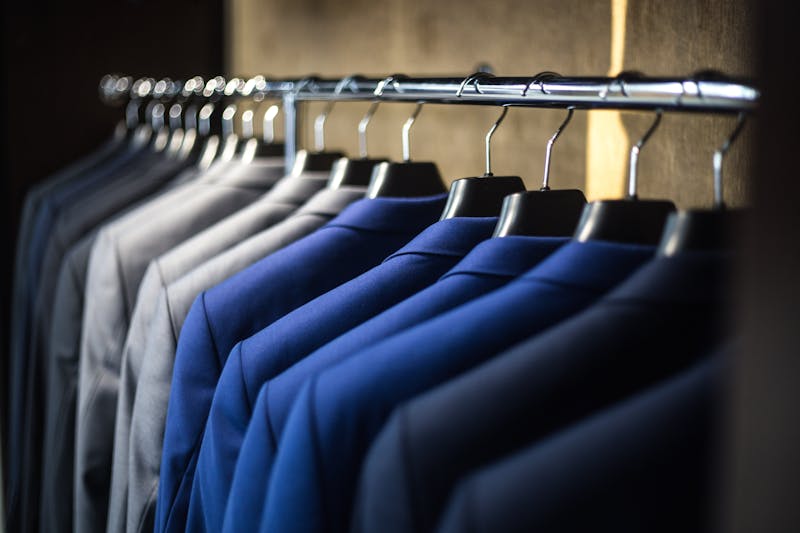
Category: Professional Wardrobe

A strong professional wardrobe is an investment in your career. This category covers how to build, maintain, and organise a work wardrobe that serves you well across every professional situation. Find capsule wardrobe guides, advice on essential workwear pieces, suit care tips, budget shopping strategies, and guidance on building a wardrobe that adapts to different office environments.

  • How to Care for a Suit: Complete Suit Maintenance Guide

    How to Care for a Suit: Complete Suit Maintenance Guide

    How do you care for a suit properly? A quality suit is one of the most valuable professional investments you can make – but it requires proper care to maintain its appearance and extend its lifespan. With correct care, a quality suit can last 10-20 years and look professional throughout. These suit care practices are what separate suits that age beautifully from suits that deteriorate quickly.

    Quick Answer: To care for a suit, hang it after wearing, rotate between at least 2 suits, brush off lint with a clothes brush, steam rather than iron, and dry clean only when necessary (no more than 2-3 times per year). Proper care makes a suit last 10+ years.
    • How often should you dry clean a suit?
    • How to remove wrinkles from a suit without dry cleaning
    • How to store a suit properly
    • Suit brushing: why and how
    • How to extend the life of a suit jacket and trousers

    How Often Should You Dry Clean a Suit?

    Dry clean a suit as infrequently as possible – typically 1-3 times per year at most. This counterintuitive advice is because dry cleaning, despite being the standard cleaning method, gradually breaks down suit fabric fibres over time. The more frequently you dry clean, the faster the suit ages. Between dry cleaning: (1) Air the suit after wearing (hang on a quality wooden hanger for 24 hours before returning to the wardrobe); (2) Spot clean any stains immediately with a damp cloth rather than sending the entire suit to the cleaner; (3) Use a clothes brush (see below) to remove surface dirt and lint. Reserve dry cleaning for genuine staining or when the suit has an odour that airing doesn’t resolve.

    6 Steps to Properly Care for Your Suit

    1. Hang your suit on a wide-shouldered hanger immediately after wearing
    2. Allow 24-48 hours between wears – fabric needs to recover its shape
    3. Brush with a clothes brush after each wear to remove dust and fibers
    4. Steam to remove wrinkles – avoid direct iron contact with the fabric
    5. Dry clean sparingly – maximum 2-3 times per year to preserve fabric
    6. Store in a breathable garment bag, never plastic

    How Do You Remove Wrinkles from a Suit Without Dry Cleaning?

    The most effective ways to remove suit wrinkles: (1) Steam – a clothes steamer (£30-80) is the most effective and safest method for removing wrinkles from suits; hold the steamer 5-10cm from the fabric, working in downward strokes; (2) Bathroom steam – hang the suit in a bathroom while running a hot shower; the steam relaxes wrinkles without touching the fabric; (3) Professional pressing – a good dry cleaner can press a suit without a full clean for less cost; (4) Hanging after wearing – many travel wrinkles fall out naturally if you hang the suit properly on a quality hanger. Avoid: home ironing directly on suit fabric (high heat + contact can damage wool); pressing without a pressing cloth.

    How Do You Store a Suit Properly?

    Proper suit storage: (1) Use a quality wooden or thick hanger – wire hangers distort suit shoulders permanently; the hanger should be approximately the width of your shoulders; (2) Use a suit bag for long-term storage but not for everyday storage – suits need to breathe and shouldn’t be stored sealed in plastic; (3) Allow at least 24 hours between wearings – wool needs time to recover its shape and air out; (4) Give suits space in the wardrobe – compressed suits crease; (5) Cedar shoe trees or cedar blocks in the wardrobe repel moths (a genuine risk for wool suits); (6) Don’t store suits in damp environments – dampness promotes mould and damages fabric.

    What Is Suit Brushing and Why Does It Matter?

    Suit brushing – using a quality clothes brush (natural bristle, €20-40) to brush the suit after wearing – removes surface dirt, lint, and dust before they embed into the fabric. This is one of the most effective and underused suit care practices. Brush in the direction of the fabric grain; work systematically over the jacket and trousers. Regular brushing significantly reduces the need for dry cleaning by keeping the fabric surface clean. It also revives the nap of the wool, keeping the fabric looking fresh. A quality clothes brush (Abbeyhorn, Kent, or similar) lasts a lifetime and is one of the best-value suit care investments you can make.

    Related Articles

    Related OfficeL guide: Men’s Work Wardrobe on a Budget: How to Dress Professionally Without Spending a Lot

    Next step: Want more business casual inspiration? Browse our complete workwear collection for daily office outfit ideas.

    Shop the Look

    Looking for suits, dresses and footwear? Here are our top picks for the office:

    We may earn a commission from purchases made through these links at no extra cost to you. This helps us keep The Officel free.

    Get the Free Office Dress Code Cheat Sheet

    Join our newsletter and get a printable guide to every office dress code – from business formal to casual Friday.

    Download the Free Guide →


    You Might Also Like

  • How to Shop Secondhand for Work Clothes: Thrift and Vintage Workwear Guide

    How to Shop Secondhand for Work Clothes: Thrift and Vintage Workwear Guide

    Can you build a professional work wardrobe from secondhand and thrifted clothing? Yes – and for quality professional clothing specifically, the secondhand market is excellent. Suits, blazers, wool trousers, and quality leather shoes are often available secondhand at significant discounts from their original prices, and quality professional clothing retains its professional appearance for much longer than fast fashion. This guide covers how to effectively shop secondhand for work clothes.

    • Why secondhand shopping works particularly well for professional clothing
    • Best platforms for secondhand professional clothing (online)
    • How to identify quality when shopping secondhand
    • Secondhand professional clothing categories to prioritize
    • What to avoid when buying secondhand workwear

    Why Does Secondhand Shopping Work Well for Professional Clothing?

    Secondhand professional clothing is disproportionately good value because: (1) Quality professional clothing (suits, blazers, quality trousers) retains its appearance for 10-20+ years if well cared for – a quality suit from 5 years ago is still an excellent quality suit; (2) Classic professional styles (navy suits, grey trousers, white shirts) never go significantly out of fashion; (3) Original prices for quality professional clothing are high (a good suit costs $300-1000+ new), meaning the secondhand discount is substantial; (4) The market for secondhand professional clothing is less competitive than streetwear or designer casual, meaning better deals are available; (5) Tailoring can fix most fit issues, meaning near-fit secondhand pieces can become perfectly-fitting garments.

    Which Platforms Are Best for Secondhand Professional Clothing?

    Top secondhand and resale platforms for professional clothing: (1) eBay – the deepest market for secondhand professional clothing; quality suits, blazers, and shoes available from individuals and specialist sellers; (2) Vinted – popular in Europe for secondhand fashion including professional clothing; (3) Depop – skews toward fashion, but good for quality brands at accessible prices; (4) ThredUp (US) – quality curated secondhand women’s professional clothing; (5) The RealReal (US) – luxury secondhand including designer professional pieces; (6) Local charity shops (UK) and thrift stores (US) – excellent for unknown quality finds; (7) Suits (UK) – specialist secondhand suit retailers. Search specifically for brand names (Reiss, Ted Baker, J.Crew, M&S, ASOS premium) rather than generic searches.

    How to Identify Quality in Secondhand Professional Clothing

    Quality indicators to look for when buying secondhand professional clothing: (1) Natural fibres – check the label; 100% wool, wool blend, 100% cotton, linen, silk are quality markers; polyester-heavy blends age less well; (2) Stitching quality – neat, even stitching; any loose threads or pilling that isn’t from use suggests lower quality original construction; (3) Hardware quality – buttons should be natural materials (horn, shell) or high-quality plastic, not lightweight plastic; (4) Lining quality – quality suits and blazers have full or half linings in quality fabric; (5) Brand research – learn which brands produce quality at their price point and search for those specifically.

    Related Articles

    Related OfficeL guide: Men’s Work Wardrobe on a Budget: How to Dress Professionally Without Spending a Lot

    Next step: Want more business casual inspiration? Browse our complete workwear collection for daily office outfit ideas.

    Shop the Look

    Looking for suits, outerwear and dresses? Here are our top picks for the office:

    We may earn a commission from purchases made through these links at no extra cost to you. This helps us keep The Officel free.

    Get the Free Office Dress Code Cheat Sheet

    Join our newsletter and get a printable guide to every office dress code – from business formal to casual Friday.

    Download the Free Guide →


    You Might Also Like

  • Sustainable Professional Clothing: Ethical Workwear Brands Guide

    Sustainable Professional Clothing: Ethical Workwear Brands Guide

    What are the best sustainable professional clothing brands? Growing awareness of fashion’s environmental and ethical impact has created significant demand for workwear that is professional, well-made, and responsibly produced. This guide covers the best sustainable workwear brands across price points – from accessible sustainable basics to premium investment pieces.

    • What makes professional clothing sustainable?
    • Best sustainable workwear brands for women
    • Best sustainable workwear brands for men
    • Sustainable professional clothing at different price points
    • The sustainability benefit of buying quality over quantity

    What Makes Professional Clothing Sustainable?

    Sustainable professional clothing combines several factors: responsible material sourcing (organic cotton, recycled fabrics, certified wool, natural linen); fair labor practices (certified factories, fair wages, safe conditions); durable construction (quality manufacturing that extends product lifespan); and timeless design (classic cuts that remain professional for years rather than fast-fashion seasonal trends). No single certification covers all of these – look for combinations of GOTS (organic textiles), B Corp, Fair Trade, or bluesign certifications alongside credible supply chain transparency. “Sustainable” marketing claims without certification evidence should be scrutinized.

    Which Sustainable Workwear Brands Are Best for Women?

    Top sustainable professional clothing brands for women: (1) Eileen Fisher – US brand specializing in simple, elegant professional pieces; certified B Corp, focused on organic and sustainable materials; excellent quality and longevity; (2) Patagonia – known for outdoor wear but their workwear range is professional and highly sustainable; strong environmental credentials and fair trade certification; (3) Veja – French brand making quality professional footwear with transparent sustainability credentials; (4) Thought Clothing (UK) – sustainable fabrics (bamboo, organic cotton), quality professional basics; (5) People Tree – pioneer of fair trade fashion, quality professional pieces at accessible prices. These brands prioritize both quality and transparency.

    Which Sustainable Workwear Brands Are Best for Men?

    Top sustainable professional clothing brands for men: (1) Patagonia – excellent sustainable workwear (including suits and dress shirts in recycled materials); (2) Organic Basics – quality sustainable basics (t-shirts, underwear, base layers) in organic and recycled materials; (3) Veja – quality professional footwear with certified sustainable supply chain; (4) Gant Rugger (sustainable line) – quality professional clothing with improving sustainability credentials; (5) Finisterre (UK) – quality merino knitwear and professional pieces with strong sustainability focus; (6) Kotn – quality Egyptian cotton clothing with certified fair supply chain. Quality investment in these brands typically outperforms fast fashion over 3-5 years of use.

    What Is the Most Sustainable Professional Wardrobe Strategy?

    The most environmentally sustainable professional wardrobe approach: buy fewer, better-quality pieces that last significantly longer. A quality wool blazer worn 200 times over 10 years has a dramatically lower carbon footprint per wear than three cheaper blazers replaced every 2-3 years. Quality natural fibres (wool, cotton, linen, silk) are both more professional and more sustainable than synthetic alternatives. Secondhand quality professional clothing (from Vinted, eBay, or specialist secondhand retailers) has the lowest environmental footprint of all – and quality professional clothing retains its appearance much longer than fast fashion. The quality-durability-sustainability triangle all point toward the same choice.

    Related Articles

    Next step: Want more business casual inspiration? Browse our complete workwear collection for daily office outfit ideas.

    Shop the Look

    Looking for outerwear, dresses and suits? Here are our top picks for the office:

    We may earn a commission from purchases made through these links at no extra cost to you. This helps us keep The Officel free.

    Get the Free Office Dress Code Cheat Sheet

    Join our newsletter and get a printable guide to every office dress code – from business formal to casual Friday.

    Download the Free Guide →


    You Might Also Like

  • Dress Code for Career Changers: New Industry Guide

    Dress Code for Career Changers: New Industry Guide

    Quick answer: This guide explains dress code for career changers: new industry guide in plain language, with practical examples and clear next steps.

    What should you wear when changing careers or switching industries? Career changers face a unique professional dress challenge: your current wardrobe may be perfectly calibrated for your old industry but wrong for your new one. Moving from law to tech, from banking to a startup, or from a corporate environment to a creative agency requires understanding – and adapting to – your new industry’s dress culture. Here is how to navigate that transition. For more on this, see our guide to Office Dress Code by Industry: What to Wear in Finance, Tech, Law, and More.

    • Why your dress code needs to change with your industry
    • Moving from formal to casual (finance to tech, law to startup)
    • Moving from casual to formal (tech to consulting, startup to corporate)
    • Dress code research before starting in a new industry
    • Building a wardrobe for a new industry on a budget

    Why Does Your Dress Code Need to Change When You Change Industries?

    Different industries have genuinely different dress cultures that signal group membership, cultural alignment, and professional understanding. Showing up to your first week at a tech startup in a full suit signals that you don’t understand (or haven’t adapted to) the new culture – a form of professional tone-deafness. Conversely, arriving at a law firm or bank wearing startup casual signals the same thing in the opposite direction. In both cases, being significantly out of step with your new industry’s dress culture creates an unnecessary negative first impression when you’re already navigating the challenges of being new. Adapting your dress to your new industry is an investment in cultural integration.

    How Do You Dress When Moving from Formal to Casual Industries?

    Finance-to-tech or law-to-startup dress transition: (1) You don’t need to sell your formal wardrobe – you need quality casual pieces that match the new culture; (2) Start from your best smart casual pieces and add: quality dark jeans, quality t-shirts (plain, good fit, quality brand), quality casual shirts (chambray, flannel), quality leather or suede sneakers; (3) Wear smart casual in your first weeks while you observe the actual dress standard – then calibrate downward if needed; (4) The trap to avoid: dressing too formally in your new casual environment reads as being unable to adapt; (5) Quality matters even in casual dress – quality casual clothing signals you’ve put thought into your presentation even without formality.

    How Do You Dress When Moving from Casual to Formal Industries?

    Tech-to-consulting or startup-to-banking dress transition: this direction requires investment in formal professional clothing if your current wardrobe is casual-focused. Priority purchases: (1) At least one quality navy or charcoal suit; (2) 3-4 quality formal dress shirts (white + light blue + pale pink or grey); (3) Quality leather Oxford or Derby shoes in black or dark brown; (4) A leather belt matching the shoes; (5) 2-3 quality formal ties (if the new environment requires them). Build the formal wardrobe over 2-3 weeks before starting – arriving in casual clothes to a formal environment creates the same negative impression as the reverse.

    Related Articles

    Related OfficeL guide: Men’s Work Wardrobe on a Budget: How to Dress Professionally Without Spending a Lot

    Next step: Want more business casual inspiration? Browse our complete workwear collection for daily office outfit ideas.

    Shop the Look

    Looking for dresses, footwear and suits? Here are our top picks for the office:

    We may earn a commission from purchases made through these links at no extra cost to you. This helps us keep The Officel free.

    Get the Free Office Dress Code Cheat Sheet

    Join our newsletter and get a printable guide to every office dress code – from business formal to casual Friday.

    Download the Free Guide →


    You Might Also Like

  • How to Dress for a Promotion: Professional Dress and Career Advancement

    How to Dress for a Promotion: Professional Dress and Career Advancement

    Does how you dress affect your chances of promotion? Research and career advice consistently point to the same answer: yes – professional appearance is a factor in how managers and senior leaders perceive competence, readiness for advancement, and cultural fit at senior levels. This guide covers the practical dress strategies that support career progression.

    Quick Answer: To dress for a promotion, start dressing like the level above your current role. Wear more structured clothing, invest in one quality blazer, upgrade your shoes, and ensure your grooming is polished. First impressions happen before you speak.
    • The “dress for the job you want” principle explained
    • How professional dress affects senior perception
    • What to wear when you want to be noticed for promotion
    • Dress code mistakes that hold careers back
    • How dress standards change with seniority

    What Does “Dress for the Job You Want” Actually Mean?

    “Dress for the job you want” is advice that is partially correct and frequently misunderstood. The principle: your dress should signal that you belong at the next level up, not just your current level. In practice, this means: observing how the people one or two levels above you dress and aligning with those standards rather than dressing exactly like your current peers. If your current team is business casual but the management layer is business professional, calibrating toward business professional signals readiness for that level. The key caveat: this only works if the quality, fit, and appropriateness is genuinely good – wearing a suit if no one at any level in your company wears suits signals misalignment, not ambition.

    5 Steps to Dress for Your Next Promotion

    1. Study how people one level above you dress and adopt their style
    2. Invest in a quality blazer – it instantly elevates any outfit
    3. Upgrade your footwear – shoes are the first thing senior colleagues notice
    4. Ensure fit is perfect – tailored clothing reads as leadership-ready
    5. Keep grooming immaculate – hair, nails, and fragrance matter

    How Does Professional Dress Affect Senior Perception?

    Research on workplace perception and career advancement consistently shows that professionals who maintain higher dress standards than their immediate peers tend to be perceived as more senior, more competent, and more ready for leadership than their actual role suggests. This occurs because senior managers use visible signals (including dress) to make rapid assessments of who is ready for more responsibility. The mechanism: consistent professional dress signals self-discipline, awareness of professional standards, and respect for the organization. These are qualities valued in managers and leaders – and visible dress quality is a proxy signal for them.

    What Should You Wear When You Want to Get Promoted?

    Practical dress strategy for promotion-seekers: (1) Calibrate to one level above your current peer group, not dramatically above (overshoot looks like misalignment); (2) Maintain the elevated standard consistently – sporadic dressing well for important meetings signals awareness rather than genuine standard; (3) Invest in quality over quantity – one excellent blazer worn regularly does more for perception than five mediocre ones worn occasionally; (4) Pay special attention to occasions where senior leaders are present – these are the moments when assessment happens; (5) Ensure grooming and maintenance standards match your clothing standard – polished clothing with poor grooming maintenance is incoherent professionally.

    What Dress Code Mistakes Hold Careers Back?

    Dress mistakes that create negative perception at the senior level: (1) Consistently casual dress in environments where the next level up dresses more professionally; (2) Visible maintenance failures (worn shoes, pilled knitwear, wrinkled shirts) that suggest carelessness about detail; (3) Trend-chasing that prioritizes fashion over appropriateness – very trendy, non-professional pieces in a conservative organization signal immaturity; (4) Dress that signals misunderstanding of the culture – being overly formal in a casual tech company or too casual in a formal finance environment both signal poor cultural reading; (5) Not updating dress as you advance – continuing to dress at the level of your first job when three promotions have elapsed.

    Related Articles

    Related OfficeL guide: Men’s Work Wardrobe on a Budget: How to Dress Professionally Without Spending a Lot

    Next step: Planning your interview outfit? Bookmark this guide and share it with a friend who has an interview coming up.

    Shop the Look

    Looking for dresses, footwear and outerwear? Here are our top picks for the office:

    We may earn a commission from purchases made through these links at no extra cost to you. This helps us keep The Officel free.

    Get the Free Office Dress Code Cheat Sheet

    Join our newsletter and get a printable guide to every office dress code – from business formal to casual Friday.

    Download the Free Guide →


    You Might Also Like

  • How to Build a Professional Wardrobe from Scratch: Complete Guide

    How to Build a Professional Wardrobe from Scratch: Complete Guide

    How do you build a professional wardrobe from scratch? Whether you’re entering the workforce for the first time, starting a new job with a different dress code, or rebuilding your wardrobe after a major life change, the task of building a professional wardrobe can feel overwhelming. This step-by-step guide makes it systematic: what to buy first, how much to spend, and how to build a complete functional professional wardrobe over time.

    Quick Answer: To build a professional wardrobe from scratch, start with quality basics: one navy or charcoal suit, 3-4 dress shirts in white and blue, 2 pairs of quality trousers, and leather Oxford or Derby shoes. These 10 foundation pieces create 20+ professional outfits.
    • Step 1: Know your dress code before you buy anything
    • The foundation wardrobe: what to buy first
    • How much to spend on each wardrobe category
    • Building your professional wardrobe over 6-12 months
    • Common professional wardrobe building mistakes

    What Should You Do Before Buying Anything for Your Professional Wardrobe?

    Before spending a single dollar on professional clothing: (1) Clarify your actual dress code – business formal, business professional, business casual, or smart casual each require different wardrobes; (2) Observe what people at your level and above wear in your specific workplace; (3) Audit what you already own that meets the standard – you may have more than you think; (4) Identify your climate and commute – outdoor commutes in cold or wet climates require different investments than car commutes in temperate climates; (5) Set a realistic budget. Buying randomly without this foundation creates a wardrobe of individual pieces that don’t work together.

    What Should You Buy First to Build a Professional Wardrobe?

    The professional wardrobe foundation – buy these first in priority order: (1) 2 pairs of professional trousers (one dark, one medium – charcoal or navy + grey or tan); (2) 1 blazer or suit jacket in navy or charcoal (the single most impactful professional garment); (3) 2-3 quality professional shirts or blouses (white + light blue + one more); (4) 1 pair of quality leather professional shoes; (5) 1 leather belt matching the shoes. This foundation of 7-9 pieces creates 6-10 workable outfit combinations. Everything else – knitwear, additional trousers, dresses, outerwear – builds on this foundation.

    How Much Should You Spend on Each Part of Your Professional Wardrobe?

    Professional wardrobe budget allocation (for a $1,000-1,500 starter budget): Shoes: $100-150 (spend more here than you think – quality shoes are visible and last years); Blazer or suit jacket: $150-300 (most visible and impactful piece); Trousers x2: $60-100 each; Shirts/blouses x3: $40-80 each; Belt: $40-60; Outerwear (if needed): $150-250. Total: approximately $800-1,300 for a functional starter wardrobe. Supplement over the next 6-12 months: additional trousers, knitwear, additional shoes, accessories. The principle: start with the highest-visibility pieces and work outward.

    How Do You Build Your Professional Wardrobe Over Time?

    The professional wardrobe building timeline: Month 1 – foundation (trousers, blazer, shirts, shoes); Months 2-3 – seasonal additions (outerwear, knitwear for winter or linen pieces for summer); Months 4-6 – style expansion (a second blazer in a different color, additional trousers, a quality bag); Months 7-12 – quality upgrades (replace any foundation pieces that turned out not to be quality enough; add a quality watch, better shoes, or a tailored suit for formal occasions). The goal after 12 months: a wardrobe where any piece can be combined with any other piece, every item is in good condition, and nothing is missing for your regular professional life.

    Related Articles

    Related OfficeL guide: Men’s Work Wardrobe on a Budget: How to Dress Professionally Without Spending a Lot

    Next step: Planning your interview outfit? Bookmark this guide and share it with a friend who has an interview coming up.

    Shop the Look

    Looking for dresses, footwear and bottoms? Here are our top picks for the office:

    We may earn a commission from purchases made through these links at no extra cost to you. This helps us keep The Officel free.

    Get the Free Office Dress Code Cheat Sheet

    Join our newsletter and get a printable guide to every office dress code – from business formal to casual Friday.

    Download the Free Guide →


    You Might Also Like

  • Men’s Work Wardrobe on a Budget: How to Dress Professionally for Less

    Men’s Work Wardrobe on a Budget: How to Dress Professionally for Less

    How can men dress professionally on a budget? Building a professional work wardrobe doesn’t require spending a lot of money – it requires spending strategically. The key is understanding which pieces are worth investing in (where quality is visible and lasting) and where you can save without compromising your professional image. This guide covers the budget men’s professional wardrobe strategy.

    • Where to invest in men’s professional wardrobe (don’t skimp)
    • Where to save money on men’s workwear
    • The minimum budget men’s professional wardrobe (8 pieces)
    • Best value professional clothing brands for men
    • How to make budget workwear look expensive

    Where Should Men Invest in Their Professional Wardrobe?

    The items where quality is visible and worth the investment: (1) Shoes – quality leather shoes last years with proper care; cheap shoes look cheap and wear quickly. Budget $100+ for leather Derby or Oxford shoes; (2) Suits and blazers – fit is everything and quality shows; a mid-range suit at $300-500 beats a cheap suit at $100; (3) Dress shirts – well-fitted quality cotton shirts are the foundation of professional dress; spend $40-80 per shirt; (4) Belt – should match shoe color and be quality leather; a $40-60 quality leather belt works for years.

    Where Can Men Save Money on Workwear?

    Categories where savings don’t compromise professional appearance: (1) Chinos and trousers – Uniqlo, H&M, or M&S offer excellent quality at $40-60; (2) T-shirts and underlayers – not visible, any quality brand works; (3) Ties – mid-range ties at $30-50 are indistinguishable from $100 ties in most office settings; (4) Basic knitwear – Uniqlo merino crewnecks at $40-50 are genuine quality; (5) Casual work shirts – ASOS, Zara, and H&M offer good formal shirts at $30-50. Save here and redirect budget to shoes and key outerwear.

    The Minimum Budget Men’s Professional Wardrobe

    The 8-piece starter professional wardrobe: (1) One quality navy suit ($300-450, buy on sale); (2) Two quality dress shirts (white + light blue, $40-80 each); (3) One quality navy or grey blazer ($150-250); (4) Two pairs of formal trousers in grey and navy ($60-100 each); (5) One quality leather Derby or Oxford shoe in dark brown or black ($100-150); (6) Two quality dress shirts (additional colors); (7) One quality leather belt matching shoes ($40-60); (8) One quality wool overcoat for winter ($150-250 on sale). Total: approximately $1,000-1,500 for a functional starter wardrobe.

    How to Make Budget Workwear Look Expensive

    The techniques that upgrade budget professional clothing: (1) Tailor everything – a $30 alteration to sleeve length or trouser hem transforms a $100 suit; fit is the most expensive-looking quality you can buy; (2) Maintain everything – polished shoes, pressed shirts, and ironed trousers make budget clothes look professional; worn or wrinkled clothing looks cheap regardless of original price; (3) Keep it simple – plain fabrics and classic colors read as quality; busy patterns or trendy colors read as cheap; (4) Buy basics at quality retailers – Uniqlo, M&S, and COS offer excellent value for basics; (5) Shop end-of-season sales – quality suit at 50% off is always better than full-price cheap.

    Related Articles

    Related OfficeL guide: Casual Friday Outfit Ideas: What to Wear on Dress-Down Day

    Next step: Want more business casual inspiration? Browse our complete workwear collection for daily office outfit ideas.

    Shop the Look

    Looking for dresses, footwear and suits? Here are our top picks for the office:

    We may earn a commission from purchases made through these links at no extra cost to you. This helps us keep The Officel free.

    Get the Free Office Dress Code Cheat Sheet

    Join our newsletter and get a printable guide to every office dress code – from business formal to casual Friday.
    Download the Free Guide →


    You Might Also Like

  • What Is Professional Dress Code?

    What Is Professional Dress Code?

    Professional dress code? This guide updates what is professional dress code? to match high-intent search phrasing discovered from YouTube autocomplete and public question research.

    What should healthcare professionals wear to work? Dress codes in healthcare vary dramatically by role and setting – from scrubs and uniforms in clinical environments to business casual and even business professional in administrative and executive roles. This guide covers all healthcare professional dress scenarios.

    • Clinical healthcare dress codes: scrubs, uniforms, and PPE
    • Healthcare administrative dress codes
    • Hospital executive and leadership dress
    • Patient-facing vs non-patient-facing dress standards
    • What healthcare professionals wear under scrubs

    What Is the Dress Code for Clinical Healthcare Workers?

    Clinical healthcare workers (nurses, doctors, surgical staff, lab technicians) typically wear scrubs, uniforms, or white coats as their primary professional attire. Scrubs have become the dominant clinical dress code in most hospital and clinical environments due to hygiene requirements, functionality, and infection control standards. Color-coded scrubs are common in larger hospitals (different departments wear different colors). Under scrubs: solid-colored undershirts or compression layers in neutral colors. Footwear: clean, closed-toe shoes with non-slip soles – clogs (Dansko, Sanita) and athletic shoes are standard.

    Healthcare Administrative and Office Roles

    Healthcare administrators, medical office managers, billing specialists, HR staff, and other non-clinical healthcare roles follow typical office dress codes. In most hospital administrative departments, business casual is the standard. In healthcare executive roles (C-suite, VP level), business professional to business casual is expected. The key distinction: administrative staff who regularly interact with patients may dress more formally to convey trust and professionalism; back-office staff typically follow standard business casual.

    Hospital Executive and Healthcare Leadership Dress

    Hospital CEOs, CMOs, CNOs, and other healthcare executives typically dress to business professional standards. Patient interaction, board meetings, and community-facing roles require a polished professional appearance. Business professional for healthcare executives: blazers, formal trousers, quality shoes – comparable to corporate executives in other industries. Healthcare leaders often wear business professional to hospital rounding visits to visually signal their role to patients and staff.

    Patient-Facing vs Non-Patient-Facing Standards

    The key distinction in healthcare dress: patient-facing roles require an appearance that conveys trust, competence, and cleanliness. Non-patient-facing roles can be more relaxed. If you regularly see patients (whether clinical or administrative), ensure clothing is: clean and wrinkle-free, not too casual (patients perceive professionalism through appearance), and consistent with your healthcare facility’s brand standards. Many healthcare organizations have explicit dress code policies – check your employer’s specific requirements.

    Related Articles

    Frequently Asked Questions

    What is the most important rule for what to wear to work in healthcare: professional dress code guide?

    Fit is the single most important factor. A well-fitted outfit in a simple style always looks more professional than an expensive, poorly-fitted one. Get key pieces tailored if needed.

    How much should you spend on a professional wardrobe?

    For a starter professional wardrobe, aim for 10 versatile pieces in neutral colors that mix and match well. Quality over quantity – 2-3 well-made basics outperform 10 cheap trendy items.

    What’s the fastest way to elevate a basic office outfit?

    Add a structured blazer, switch to leather or quality shoes, and ensure everything is pressed and clean. These three changes transform any basic outfit into a polished professional look.

    Related OfficeL guide: Casual Friday Outfit Ideas: What to Wear on Dress-Down Day

    Next step: Planning your interview outfit? Bookmark this guide and share it with a friend who has an interview coming up.

    Shop the Look

    Looking for dresses, accessories and footwear? Here are our top picks for the office:

    We may earn a commission from purchases made through these links at no extra cost to you. This helps us keep The Officel free.

    Get the Free Office Dress Code Cheat Sheet

    Join our newsletter and get a printable guide to every office dress code – from business formal to casual Friday.

    Download the Free Guide →


    You Might Also Like

  • Women’s Work Outfits: The Complete Professional Wardrobe Guide

    Women’s Work Outfits: The Complete Professional Wardrobe Guide

    What should women wear to work in 2026? Whether you are starting a new job, refreshing your professional wardrobe, or navigating a confusing dress code, this complete guide covers everything: dress code levels, outfit formulas, wardrobe essentials, and seasonal guidance for modern professional women.

    • Women’s work outfit dress codes: from formal to casual
    • Business formal outfit ideas for women
    • Business casual outfit ideas for women
    • Smart casual work outfits for women
    • Building a complete women’s work wardrobe
    • Seasonal work outfit guidance: spring, summer, fall, winter

    Women’s Work Dress Codes: What Each Level Means

    What Are the Best Women’s Work Outfit Formulas?

    The most versatile formula for women’s work outfits: tailored trousers or a pencil skirt + structured blouse + optional blazer. This combination works across business casual and business professional settings.

    There are five main dress code levels for women’s work outfits: business formal (full suits, most strict), business professional (structured blazers without requiring a full suit), business casual (the most common modern standard), smart casual (more relaxed, allows jeans in quality fabrics), and casual (no specific requirements). Most corporate offices use business casual as their standard. Finance, law, and consulting typically require business professional or formal.

    For detailed definitions, see our complete dress code guide.

    Business Formal Work Outfits for Women

    For the most formal professional situations: a tailored trouser suit (jacket and matching trousers) in navy, charcoal, or black; a skirt suit (matching blazer and pencil skirt); or a structured formal dress in a solid professional color. Shoes: closed-toe pumps or structured flats in leather. Colors: black, navy, charcoal, and dark grey are the most formal; muted professional tones (burgundy, forest green) are acceptable.

    Accessories: minimal and quality – simple jewelry, a structured bag. See our full business attire for women guide.

    Business Casual Work Outfits for Women

    Business casual is the most common women’s work outfit standard. The core business casual outfit formulas for women: 1) Blazer + formal trousers + blouse (most versatile, works everywhere); 2) Sheath dress + blazer (professional and comfortable); 3) Midi skirt + structured top + cardigan or blazer (feminine and appropriate); 4) Wide-leg trousers + silk blouse + pointed-toe flats (contemporary business casual). For complete outfit ideas, see our business casual dress code for women guide.

    Smart Casual Work Outfits for Women

    Smart casual allows more flexibility: dark well-fitted jeans, quality knitwear, structured cardigans, and clean leather sneakers or ankle boots. Smart casual outfit formulas for women: 1) Dark jeans + silk blouse + structured cardigan + ankle boots; 2) Midi skirt + quality t-shirt + blazer + loafers; 3) Quality ponte trousers + fitted knitwear + clean sneakers. The key is looking intentional – pieces should fit well and look quality, even if relaxed.

    See our smart casual outfit ideas.

    Building a Women’s Work Wardrobe: The Essentials

    A complete women’s work wardrobe for business casual environments requires approximately 15-20 pieces: 1 navy blazer, 1 black blazer, 2 pairs of formal trousers (black, grey or navy), 1 pair of chinos or ponte trousers, 2 formal blouses (white, plus 1 color), 1-2 sheath dresses, 1 midi skirt, 1 quality cardigan, 2 fine-knit tops, 1 pair of black pumps or flats, 1 pair of neutral-tone flats or low heels, and 1 structured bag. These pieces create 50+ distinct outfit combinations.

    Seasonal Work Outfits for Women

    Seasonal guidance for women’s work outfits: Spring (lighter layering, pastel blouses, transitional blazers); Summer (linen and cotton blends, sleeveless blouses with blazer layer for air-conditioned offices, lighter trouser fabrics); Fall (texture – wool blends, structured cardigans, ankle boots, jewel-tone blouses); Winter (heavy blazers over turtlenecks, warm wool trousers, knee-high boots, layered knitwear). See our spring and fall outfit guides for specific ideas.

    What Are the Essential Pieces Every Professional Woman Should Own?

    Every professional woman’s wardrobe should include these essential pieces: one navy or black blazer (the most versatile professional garment), two pairs of formal trousers in neutral colors, a quality sheath dress (works for business casual through business formal), white and light-colored blouses, a pair of quality closed-toe pumps or flats, and a structured professional bag. These 8-10 pieces form the foundation for dozens of outfit combinations across all professional dress code levels.

    Related Articles

    Next step: Planning your interview outfit? Bookmark this guide and share it with a friend who has an interview coming up.

    Shop the Look

    Looking for dresses, footwear and outerwear? Here are our top picks for the office:

    We may earn a commission from purchases made through these links at no extra cost to you. This helps us keep The Officel free.

    Get the Free Office Dress Code Cheat Sheet

    Join our newsletter and get a printable guide to every office dress code – from business formal to casual Friday.

    Download the Free Guide →


    You Might Also Like

  • Workwear Capsule Wardrobe for Men: 12 Pieces, 30 Outfits

    Workwear Capsule Wardrobe for Men: 12 Pieces, 30 Outfits

    Business casual capsule wardrobe? This guide updates workwear capsule wardrobe for men: 12 pieces, 30 outfits to match high-intent search phrasing discovered from YouTube autocomplete and public question research.

    What is a workwear capsule wardrobe for men? A capsule wardrobe is a minimal set of high-quality, versatile pieces that combine to create a large number of outfit options. For men’s professional dress, 12 carefully chosen pieces can cover virtually every workplace situation and generate 30+ distinct outfit combinations.

    • The 12 core pieces for a men’s workwear capsule wardrobe
    • How to combine them: 30+ outfit formulas
    • What to buy first and what to add later
    • Budget guidance: how much to spend on each piece

    The 12 Core Pieces

    A complete men’s workwear capsule wardrobe consists of: 1 navy blazer, 1 charcoal suit (jacket + trousers = 2 versatile pieces), 1 pair of grey formal trousers, 1 pair of navy chinos, 1 pair of dark khaki chinos, 2 white Oxford shirts, 1 light blue Oxford shirt, 1 navy fine-knit crewneck sweater, 1 pair of black leather Oxford shoes, 1 pair of brown leather loafers, and 1 quality leather briefcase or bag. These 12 pieces (counting the suit as 2) cover business formal through smart casual.

    Key Outfit Combinations

    From these 12 pieces, the key outfit formulas are: (1) Full suit + white shirt + black Oxfords = business formal; (2) Navy blazer + grey trousers + white shirt + brown loafers = business professional; (3) Suit jacket + navy chinos + light blue shirt + brown loafers = elevated business casual; (4) Navy blazer + khaki chinos + blue shirt + brown loafers = standard business casual; (5) Grey trousers + navy sweater + white shirt underneath + black Oxfords = smart business casual; (6) Khaki chinos + blue shirt + brown loafers = relaxed business casual.

    What to Buy First

    Priority 1: The navy blazer. Nothing adds more versatility to a men’s professional wardrobe than a well-fitted navy blazer. It transforms chinos into business casual, works with suits as a blazer alternative, and covers more situations than any single piece. Priority 2: Quality leather shoes (black and brown). Priority 3: The charcoal suit (your formal fallback). Priority 4: Chinos and Oxford shirts (your everyday foundation).

    Budget Guidance

    Invest most in pieces worn most often and that last longest: navy blazer ($150-400), leather shoes ($100-250/pair), charcoal suit ($200-500). Spend less on: Oxford shirts ($30-60 each), chinos ($50-100/pair). The total for a complete 12-piece capsule wardrobe should fall between $800-1500 depending on brands and quality tier. The most important principle: buy the best quality you can afford for blazers and shoes. These are the pieces that define how polished the entire wardrobe looks.

    How Many Pieces Do You Need in a Men’s Work Capsule Wardrobe?

    A functional men’s work capsule wardrobe requires a minimum of 10-12 pieces to cover business casual to business formal situations: 1 navy blazer, 1 charcoal suit, 2 pairs of chinos, 2-3 Oxford shirts, 1 fine-knit sweater, 2 pairs of quality leather shoes (black and brown), and 1 quality bag. With these pieces, a professional man can dress appropriately for any office situation for a full work week without repeating an outfit.

    Related Articles

    Next step: Want more business casual inspiration? Browse our complete workwear collection for daily office outfit ideas.

    Shop the Look

    Looking for bottoms, footwear and outerwear? Here are our top picks for the office:

    We may earn a commission from purchases made through these links at no extra cost to you. This helps us keep The Officel free.

    Get the Free Office Dress Code Cheat Sheet

    Join our newsletter and get a printable guide to every office dress code – from business formal to casual Friday.

    Download the Free Guide →


    You Might Also Like