Tag: men

  • How to Care for a Suit: Complete Suit Maintenance Guide

    How to Care for a Suit: Complete Suit Maintenance Guide

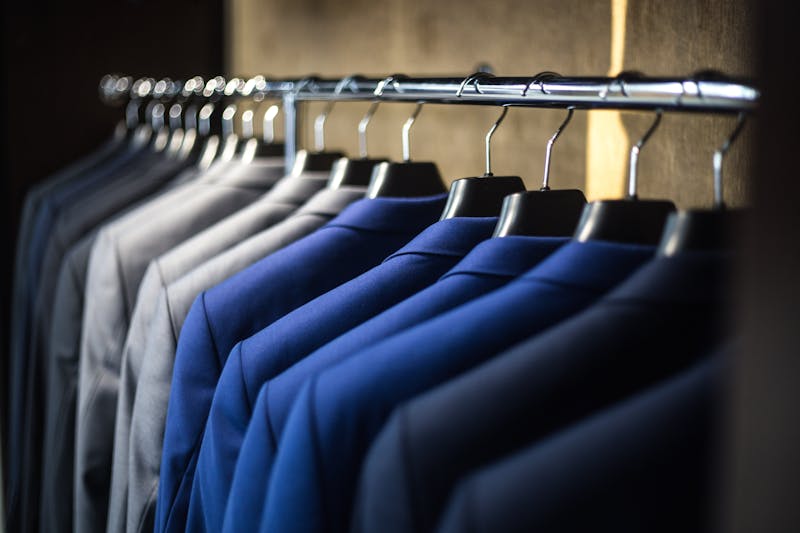
    How do you care for a suit properly? A quality suit is one of the most valuable professional investments you can make – but it requires proper care to maintain its appearance and extend its lifespan. With correct care, a quality suit can last 10-20 years and look professional throughout. These suit care practices are what separate suits that age beautifully from suits that deteriorate quickly.

    Quick Answer: To care for a suit, hang it after wearing, rotate between at least 2 suits, brush off lint with a clothes brush, steam rather than iron, and dry clean only when necessary (no more than 2-3 times per year). Proper care makes a suit last 10+ years.
    • How often should you dry clean a suit?
    • How to remove wrinkles from a suit without dry cleaning
    • How to store a suit properly
    • Suit brushing: why and how
    • How to extend the life of a suit jacket and trousers

    How Often Should You Dry Clean a Suit?

    Dry clean a suit as infrequently as possible – typically 1-3 times per year at most. This counterintuitive advice is because dry cleaning, despite being the standard cleaning method, gradually breaks down suit fabric fibres over time. The more frequently you dry clean, the faster the suit ages. Between dry cleaning: (1) Air the suit after wearing (hang on a quality wooden hanger for 24 hours before returning to the wardrobe); (2) Spot clean any stains immediately with a damp cloth rather than sending the entire suit to the cleaner; (3) Use a clothes brush (see below) to remove surface dirt and lint. Reserve dry cleaning for genuine staining or when the suit has an odour that airing doesn’t resolve.

    6 Steps to Properly Care for Your Suit

    1. Hang your suit on a wide-shouldered hanger immediately after wearing
    2. Allow 24-48 hours between wears – fabric needs to recover its shape
    3. Brush with a clothes brush after each wear to remove dust and fibers
    4. Steam to remove wrinkles – avoid direct iron contact with the fabric
    5. Dry clean sparingly – maximum 2-3 times per year to preserve fabric
    6. Store in a breathable garment bag, never plastic

    How Do You Remove Wrinkles from a Suit Without Dry Cleaning?

    The most effective ways to remove suit wrinkles: (1) Steam – a clothes steamer (£30-80) is the most effective and safest method for removing wrinkles from suits; hold the steamer 5-10cm from the fabric, working in downward strokes; (2) Bathroom steam – hang the suit in a bathroom while running a hot shower; the steam relaxes wrinkles without touching the fabric; (3) Professional pressing – a good dry cleaner can press a suit without a full clean for less cost; (4) Hanging after wearing – many travel wrinkles fall out naturally if you hang the suit properly on a quality hanger. Avoid: home ironing directly on suit fabric (high heat + contact can damage wool); pressing without a pressing cloth.

    How Do You Store a Suit Properly?

    Proper suit storage: (1) Use a quality wooden or thick hanger – wire hangers distort suit shoulders permanently; the hanger should be approximately the width of your shoulders; (2) Use a suit bag for long-term storage but not for everyday storage – suits need to breathe and shouldn’t be stored sealed in plastic; (3) Allow at least 24 hours between wearings – wool needs time to recover its shape and air out; (4) Give suits space in the wardrobe – compressed suits crease; (5) Cedar shoe trees or cedar blocks in the wardrobe repel moths (a genuine risk for wool suits); (6) Don’t store suits in damp environments – dampness promotes mould and damages fabric.

    What Is Suit Brushing and Why Does It Matter?

    Suit brushing – using a quality clothes brush (natural bristle, €20-40) to brush the suit after wearing – removes surface dirt, lint, and dust before they embed into the fabric. This is one of the most effective and underused suit care practices. Brush in the direction of the fabric grain; work systematically over the jacket and trousers. Regular brushing significantly reduces the need for dry cleaning by keeping the fabric surface clean. It also revives the nap of the wool, keeping the fabric looking fresh. A quality clothes brush (Abbeyhorn, Kent, or similar) lasts a lifetime and is one of the best-value suit care investments you can make.

    Related Articles

    Related OfficeL guide: Men’s Work Wardrobe on a Budget: How to Dress Professionally Without Spending a Lot

    Next step: Want more business casual inspiration? Browse our complete workwear collection for daily office outfit ideas.

    Shop the Look

    Looking for suits, dresses and footwear? Here are our top picks for the office:

    We may earn a commission from purchases made through these links at no extra cost to you. This helps us keep The Officel free.

    Get the Free Office Dress Code Cheat Sheet

    Join our newsletter and get a printable guide to every office dress code – from business formal to casual Friday.


    Download the Free Guide →


    You Might Also Like

  • Men’s Business Casual for Different Body Types: Outfit Tips

    Men’s Business Casual for Different Body Types: Outfit Tips

    Business casual for men fall? This guide updates men’s business casual for different body types: outfit tips to match high-intent search phrasing discovered from YouTube autocomplete and public question research.

    How should men of different body types dress for business casual? Professional dress for men follows the same fundamental principle regardless of body type: fit is the most important factor. But what “good fit” means varies by body type, and different cuts and styles flatter different proportions. These outfit tips are specifically designed for the four most common male body type challenges in professional dress.

    • Business casual for tall men: proportion and fit tips
    • Business casual for shorter men: elongating principles
    • Business casual for slim and athletic men
    • Business casual for larger and fuller-figured men

    What Are the Best Business Casual Outfit Tips for Tall Men?

    Business casual principles for tall men: (1) You have more latitude with patterns and scale – larger-scale patterns (broader stripes, larger checks) that overwhelm shorter frames work proportionally on tall men; (2) Wide-leg and fuller-cut trousers are proportional on tall frames – slim cuts can look disproportionate on very long legs; (3) Layering works especially well – tall men can carry multiple layers (shirt + waistcoat + blazer) that overwhelm shorter frames; (4) The key challenge is finding clothes that are long enough – look for brands with tall ranges (L/XL in sleeve length, 34+ inseam); (5) Quality heavyweight fabrics work well on tall frames – they have the height to carry them.

    What Are the Best Business Casual Tips for Shorter Men?

    Business casual principles for shorter men: (1) Slim and tapered cuts elongate – avoid very wide-leg or baggy trousers; (2) Monochromatic dressing (same tone throughout) creates the appearance of height – navy blazer + navy trousers is more elongating than a navy blazer + tan chinos; (3) A higher trouser rise (mid-to-high waist) creates a longer leg line; (4) Avoid very long jacket or blazer lengths – a shorter-cut blazer that hits at the hip creates better proportion; (5) Avoid very large patterns, large plaids, or horizontal stripes that emphasize width over height; (6) Matching shoe color to trouser color creates a continuous leg line. Shorter men often find their best professional clothes in fitted ranges rather than “regular” cuts.

    What Are the Best Business Casual Outfit Tips for Slim Men?

    Business casual for slim and slim-athletic men: (1) Well-fitted is very different from too tight – slim men should aim for clothes that skim the body without clinging; (2) Structured pieces (blazers with a little shoulder structure) add visual width to narrow shoulders; (3) Layering creates visual depth – wearing a quality crewneck under a blazer adds visual bulk without looking heavy; (4) Horizontal elements (breast pockets, subtle horizontal patterns) add visual width; (5) Fitted cuts are appropriate, but avoid very tight clothing that reveals too much body. The slim professional advantage: quality tailored clothing looks excellent on lean frames.

    What Are the Best Business Casual Tips for Larger Men?

    Business casual for larger and fuller-figured men: (1) Fit above everything – poorly fitted oversized clothing looks worse than well-fitted clothing in a larger size; buy for the largest measurement and tailor where needed; (2) Dark, solid colors in the torso create a slimmer visual profile; (3) Vertical lines (pinstripes, vertical seaming) elongate; (4) Avoid very wide lapels and very large patterns that add visual bulk; (5) A quality structured blazer creates a clean shoulder line that improves overall proportion; (6) Quality fabrics that drape rather than cling look better at every size. The key: invest in a good tailor rather than buying increasingly baggy clothing as a solution to fit challenges.

    Related Articles

    Related OfficeL guide: Men’s Work Wardrobe on a Budget: How to Dress Professionally Without Spending a Lot

    Next step: Want more business casual inspiration? Browse our complete workwear collection for daily office outfit ideas.

    Shop the Look

    Looking for outerwear, dresses and bottoms? Here are our top picks for the office:

    We may earn a commission from purchases made through these links at no extra cost to you. This helps us keep The Officel free.

    Get the Free Office Dress Code Cheat Sheet

    Join our newsletter and get a printable guide to every office dress code – from business formal to casual Friday.

    Download the Free Guide →


    You Might Also Like

  • Men’s Summer Office Outfits: What to Wear to Work in Hot Weather

    Men’s Summer Office Outfits: What to Wear to Work in Hot Weather

    What to wear to work men summer? This guide updates what to wear to work men summer? to match high-intent search phrasing discovered from YouTube autocomplete and public question research.

    What are the best summer office outfits for men? Heat and professional dress are genuinely challenging to combine – commuting in 30°C heat in a formal suit is uncomfortable, and sweating visibly undermines professional appearance. These men’s summer workwear formulas balance looking professional with staying comfortable in hot weather.

    • Best fabrics for men’s summer office outfits
    • Best summer business casual outfit formulas for men
    • Can men wear short sleeves to work?
    • How to handle office air conditioning in summer
    • Summer business formal for men (when suits are required)

    What Are the Best Fabrics for Men’s Summer Office Outfits?

    Best summer professional fabrics for men: (1) Lightweight wool (counterintuitively, fine tropical-weight wool is excellent for summer – breathes well, resists odor better than cotton, looks professional); (2) Linen (the most breathable professional fabric – wrinkles quickly but acceptable in most business casual summer environments); (3) Cotton-linen blend (linen breathability with less wrinkling); (4) Fine cotton (quality Oxford shirts, fine cotton trousers – good for summer dress shirts); (5) Seersucker (a traditional American summer suiting fabric – light, breathable, professionally appropriate in warm climates). Avoid: polyester (traps heat and moisture), heavy wool (far too hot), synthetic blends.

    Best Men’s Summer Business Casual Outfit Formulas

    Top men’s summer business casual outfits: (1) Lightweight chinos in tan or light grey + quality polo shirt in navy or white + leather loafers – the quintessential summer business casual look; (2) Lightweight wool or linen trousers + quality Oxford shirt (short or long sleeve depending on environment) + leather loafers; (3) Light linen suit trousers (separated, worn as trousers rather than a matched suit) + quality shirt + loafers; (4) Chinos + quality linen or cotton shirt + no blazer on the hottest days (for business casual environments). The key summer upgrade: trade synthetic or heavy trousers for lightweight natural fibre options.

    Can Men Wear Short Sleeves to Work in Summer?

    Short sleeves for men at work: it depends heavily on the environment. In casual tech companies and some business casual environments in hot climates: a quality polo shirt or quality short-sleeve Oxford shirt is acceptable. In most traditional business casual offices: short sleeves are marginally acceptable in summer heat but long-sleeve rolled up is more professional. In business professional or formal environments: no short sleeves – a lightweight long-sleeve shirt is the minimum. The rule: a quality polo shirt is more professional than a casual short-sleeve t-shirt; a quality short-sleeve Oxford is better than a polo; a lightweight long-sleeve shirt beats all of these for professional credibility.

    How to Handle Office Air Conditioning in Men’s Summer Dress

    The summer office air conditioning challenge: hot outside, uncomfortably cold inside. Solutions: keep a blazer or structured cardigan at your desk for cold office days (a lightweight linen or cotton blazer handles both; leave in the office rather than carrying it); for formal environments, wear a lightweight long-sleeve shirt that handles both outside heat and inside cold; consider a thin merino layer for very cold offices. The summer layering formula for men: lightweight trousers + quality shirt + blazer at desk (not worn in commute heat) – this handles most summer office temperature ranges professionally.

    Related Articles

    Related OfficeL guide: Men’s Work Wardrobe on a Budget: How to Dress Professionally Without Spending a Lot

    Next step: Want more business casual inspiration? Browse our complete workwear collection for daily office outfit ideas.

    Shop the Look

    Looking for bottoms, tops and dresses? Here are our top picks for the office:

    We may earn a commission from purchases made through these links at no extra cost to you. This helps us keep The Officel free.

    Get the Free Office Dress Code Cheat Sheet

    Join our newsletter and get a printable guide to every office dress code – from business formal to casual Friday.

    Download the Free Guide →


    You Might Also Like

  • How to Wear a Suit Without a Tie: Business Casual Suiting

    How to Wear a Suit Without a Tie: Business Casual Suiting

    Business casual capsule wardrobe? This guide updates how to wear a suit without a tie: business casual suiting to match high-intent search phrasing discovered from YouTube autocomplete and public question research.

    How do you wear a suit without a tie? The business casual suit – wearing a full matched suit without a tie – is one of the most versatile professional looks for modern workplaces. It works for business casual environments, elevated Smart Casual Dress Code: What It Means and How to Dress events, and business professional meetings where you want to look sharp without being overly formal. Here is how to pull it off correctly.

    • Which shirt collar styles work best without a tie
    • Best shirt colors to wear with a suit without a tie
    • Should you unbutton the top button?
    • Suit styles that work best for tie-free wearing
    • When wearing a suit without a tie is and isn’t appropriate

    Which Shirt Collar Styles Work Best Without a Tie?

    The best collar styles for suits without ties: (1) Spread collar – the ideal collar for wearing without a tie; the spread sits naturally open and frames the neck well; (2) Semi-spread collar – works well, slightly less dramatic spread than a full spread collar; (3) Club collar (rounded collar) – a more fashion-forward option that looks intentional without a tie; (4) Mandarin/band collar – a definitive “no tie” option that reads as modern and deliberate. Collars to avoid without a tie: button-down collars (look too casual for a suit); very narrow point collars (collapse awkwardly without a tie); extreme cutaway collars (too dramatic without a tie).

    What Are the Best Shirt Colors for Suits Without Ties?

    Best shirt colors when wearing a suit without a tie: (1) White – the most versatile and classic; works with every suit color; looks clean and deliberate without a tie; (2) Light blue – second most versatile; creates a professional but relaxed look; (3) Light pink – works particularly well with navy and grey suits; (4) Pale grey or pale yellow – more distinctive, works for confident dressers in the right environments; (5) Subtle textured white or pale blue (Oxford, herringbone) – adds visual interest without requiring a tie. Avoid: very bright or bold solid colors without a tie (can read as casual); strong patterns without a tie (clash with suit pattern).

    Should You Unbutton the Top Button When Wearing a Suit Without a Tie?

    The top button question: unbutton exactly one button – no more. One open button with a spread collar looks intentional, modern, and relaxed-professional. Two open buttons crosses into casual territory and doesn’t work well with a suit. Zero open buttons (collar fully buttoned, no tie) looks awkward and constrained – the collar sits unnaturally high without a tie point to fill the space. The single open button with a spread or semi-spread collar is the standard “smart business casual” approach to tieless suiting.

    When Is It Appropriate to Wear a Suit Without a Tie?

    Appropriate contexts for suits without ties: business casual offices where suits are common; business meetings where you want to look smart but not strictly formal; post-work events (work dinners, client entertainment in casual venues); interviews at companies where you’ve established business casual is the norm; first dates or social events requiring “smart” dress. NOT appropriate: very formal meetings with senior stakeholders; legal or financial presentations where full business formal is expected; contexts where everyone else is wearing a tie. The test: if your most senior colleague or client is wearing a tie, you should be too.

    Related Articles

    Related OfficeL guide: Men’s Work Wardrobe on a Budget: How to Dress Professionally Without Spending a Lot

    Next step: Planning your interview outfit? Bookmark this guide and share it with a friend who has an interview coming up.

    Shop the Look

    Looking for suits, accessories and dresses? Here are our top picks for the office:

    We may earn a commission from purchases made through these links at no extra cost to you. This helps us keep The Officel free.

    Get the Free Office Dress Code Cheat Sheet

    Join our newsletter and get a printable guide to every office dress code – from business formal to casual Friday.

    Download the Free Guide →


    You Might Also Like

  • Best Work Bags: The Professional Bag Guide for Men and Women

    Best Work Bags: The Professional Bag Guide for Men and Women

    What is the best bag for work? Your work bag is one of the most visible accessories in your professional life – you carry it every day and it affects your overall professional appearance more than most accessories. This guide covers the best work bag options for men and women, what to look for, and how to choose the right bag for your professional context.

    • Best work bags for women: tote, structured bag, crossbody
    • Best work bags for men: briefcase, tote, backpack
    • What makes a bag look professional vs casual
    • How much should you spend on a work bag?
    • Can you use a backpack as a work bag?

    What Are the Best Work Bags for Women?

    The best professional bags for women by formality: (1) Structured tote bag – the most versatile professional bag; holds a laptop, documents, and daily essentials; works from business casual to business professional; (2) Structured leather satchel or shoulder bag – more formal than a tote, excellent for client meetings; (3) Briefcase-style bag with handles and shoulder strap – the most formal option for business professional environments; (4) Leather crossbody (larger sizes) – practical and professional for business casual environments. The professional bag minimum: the bag should hold your laptop without being stretched, look structured rather than slouchy, and be in a neutral professional color (black, tan, navy, cognac).

    What Are the Best Work Bags for Men?

    The best professional bags for men: (1) Leather briefcase (portfolio-style, slim) – the most formal men’s work bag for business professional and client-facing roles; (2) Leather messenger bag or satchel – more casual than a briefcase but still professional for most business casual environments; (3) Quality leather backpack (slim, structured) – appropriate for business casual and tech environments; (4) Canvas tote with leather handles – smart casual appropriate, budget-friendly. The men’s professional bag test: would you be comfortable carrying it into a senior client meeting? If the answer is no (worn, too casual, logos too prominent), it’s not your professional bag.

    What Makes a Bag Look Professional?

    The difference between a professional and casual-looking bag: structure (bags with defined shape look more professional than slouchy ones); material (genuine leather or quality leather alternatives look more professional than canvas or nylon in formal contexts); color (black, navy, tan, cognac, and other neutrals are professional; bright colors and bold patterns are less formal); hardware (clean metal hardware in silver or gold; minimal zippers and pockets looks more formal); size (should be large enough for work essentials without being overpacked and misshapen). An overpacked, shapeless bag looks as unprofessional as the wrong bag choice.

    How Much Should You Spend on a Work Bag?

    Work bag budget guidance: $80-150 (good quality entry point – quality synthetic leather or lower-tier genuine leather; brands like Fossil, Matt & Nat, or similar); $150-300 (significant quality jump – genuine leather that ages well; accessible luxury brands like Coach, Kate Spade at outlet pricing); $300-600 (excellent quality – brands like Tumi, Longchamp, Ted Baker, Strathberry); $600+ (investment bag – Mulberry, Coach flagship, quality Italian leather; these can last 10+ years). Key advice: spend what you can on the best quality bag you can afford – you carry it every day, it affects your professional image daily, and a quality leather bag ages beautifully while cheap alternatives age badly.

    Related Articles

    Next step: Want more business casual inspiration? Browse our complete workwear collection for daily office outfit ideas.

    Shop the Look

    Looking for accessories, footwear and dresses? Here are our top picks for the office:

    We may earn a commission from purchases made through these links at no extra cost to you. This helps us keep The Officel free.

    Get the Free Office Dress Code Cheat Sheet

    Join our newsletter and get a printable guide to every office dress code – from business formal to casual Friday.

    Download the Free Guide →


    You Might Also Like

  • Men’s Work Wardrobe on a Budget: How to Dress Professionally for Less

    Men’s Work Wardrobe on a Budget: How to Dress Professionally for Less

    How can men dress professionally on a budget? Building a professional work wardrobe doesn’t require spending a lot of money – it requires spending strategically. The key is understanding which pieces are worth investing in (where quality is visible and lasting) and where you can save without compromising your professional image. This guide covers the budget men’s professional wardrobe strategy.

    • Where to invest in men’s professional wardrobe (don’t skimp)
    • Where to save money on men’s workwear
    • The minimum budget men’s professional wardrobe (8 pieces)
    • Best value professional clothing brands for men
    • How to make budget workwear look expensive

    Where Should Men Invest in Their Professional Wardrobe?

    The items where quality is visible and worth the investment: (1) Shoes – quality leather shoes last years with proper care; cheap shoes look cheap and wear quickly. Budget $100+ for leather Derby or Oxford shoes; (2) Suits and blazers – fit is everything and quality shows; a mid-range suit at $300-500 beats a cheap suit at $100; (3) Dress shirts – well-fitted quality cotton shirts are the foundation of professional dress; spend $40-80 per shirt; (4) Belt – should match shoe color and be quality leather; a $40-60 quality leather belt works for years.

    Where Can Men Save Money on Workwear?

    Categories where savings don’t compromise professional appearance: (1) Chinos and trousers – Uniqlo, H&M, or M&S offer excellent quality at $40-60; (2) T-shirts and underlayers – not visible, any quality brand works; (3) Ties – mid-range ties at $30-50 are indistinguishable from $100 ties in most office settings; (4) Basic knitwear – Uniqlo merino crewnecks at $40-50 are genuine quality; (5) Casual work shirts – ASOS, Zara, and H&M offer good formal shirts at $30-50. Save here and redirect budget to shoes and key outerwear.

    The Minimum Budget Men’s Professional Wardrobe

    The 8-piece starter professional wardrobe: (1) One quality navy suit ($300-450, buy on sale); (2) Two quality dress shirts (white + light blue, $40-80 each); (3) One quality navy or grey blazer ($150-250); (4) Two pairs of formal trousers in grey and navy ($60-100 each); (5) One quality leather Derby or Oxford shoe in dark brown or black ($100-150); (6) Two quality dress shirts (additional colors); (7) One quality leather belt matching shoes ($40-60); (8) One quality wool overcoat for winter ($150-250 on sale). Total: approximately $1,000-1,500 for a functional starter wardrobe.

    How to Make Budget Workwear Look Expensive

    The techniques that upgrade budget professional clothing: (1) Tailor everything – a $30 alteration to sleeve length or trouser hem transforms a $100 suit; fit is the most expensive-looking quality you can buy; (2) Maintain everything – polished shoes, pressed shirts, and ironed trousers make budget clothes look professional; worn or wrinkled clothing looks cheap regardless of original price; (3) Keep it simple – plain fabrics and classic colors read as quality; busy patterns or trendy colors read as cheap; (4) Buy basics at quality retailers – Uniqlo, M&S, and COS offer excellent value for basics; (5) Shop end-of-season sales – quality suit at 50% off is always better than full-price cheap.

    Related Articles

    Related OfficeL guide: Casual Friday Outfit Ideas: What to Wear on Dress-Down Day

    Next step: Want more business casual inspiration? Browse our complete workwear collection for daily office outfit ideas.

    Shop the Look

    Looking for dresses, footwear and suits? Here are our top picks for the office:

    We may earn a commission from purchases made through these links at no extra cost to you. This helps us keep The Officel free.

    Get the Free Office Dress Code Cheat Sheet

    Join our newsletter and get a printable guide to every office dress code – from business formal to casual Friday.

    Download the Free Guide →


    You Might Also Like

  • Men’s Work Style Over 40: How to Dress Professionally After 40

    Men’s Work Style Over 40: How to Dress Professionally After 40

    How should men dress professionally after 40? Men’s professional style in your 40s and beyond is an opportunity: you typically have more resources, more confidence, and a clearer sense of who you are professionally. The challenge is updating your work wardrobe to reflect the seniority and gravitas you’ve earned without appearing out of touch. This guide covers professional dress for men over 40.

    • How men’s professional style changes after 40
    • Key wardrobe investments for men over 40
    • What men over 40 should avoid wearing to work
    • How to modernize your work wardrobe after 40
    • Quality vs. quantity in men’s professional dress

    How Does Men’s Professional Style Change After 40?

    Men’s professional dress after 40 shifts from building a wardrobe from scratch to investing in quality and refining what works. The key changes: quality becomes more important than quantity (fewer, better pieces); fit becomes paramount (ill-fitting clothes look worse on men over 40 than on younger men, where fit issues are more forgiven); classic styles become more relevant than trendy pieces (classics age better and signal gravitas rather than trying too hard); and subtle details (fabric quality, shoe polish, grooming) are more noticed at senior career levels.

    Key Wardrobe Investments for Men Over 40

    The professional wardrobe investments worth making after 40: (1) At least one quality suit in navy or charcoal (consider bespoke or made-to-measure if budget allows – the fit improvement is significant); (2) Quality leather Oxford or Derby shoes that are resoleable (Loake, Allen Edmonds, Church’s); (3) A quality wool overcoat in camel, navy, or charcoal; (4) Several quality dress shirts in white, light blue, and pale pink (well-fitted, quality cotton); (5) A cashmere or fine merino crewneck in navy, grey, or camel. The principle: each piece should be the best quality version you can afford.

    What Men Over 40 Should Avoid Wearing to Work

    Professional mistakes for men over 40: (1) Holding onto clothes from 10+ years ago that fit differently now – outdated styles and poor fit both undermine professional image; (2) Very trendy pieces that look age-inappropriate (certain streetwear, very fashion-forward cuts) – classics always work better at this career stage; (3) Worn-out shoes or clothing with visible aging – these signal a lack of professional investment; (4) Clothes that clearly don’t fit (too tight from weight changes, too loose from fashion changes) – invest in a tailor; (5) Ignoring grooming – hair, beard management, and skincare become more important with age.

    How to Modernize Your Work Wardrobe After 40

    Updating professional dress for men over 40: audit your current wardrobe and remove anything worn, outdated, or ill-fitting; replace with quality basics in updated but classic cuts (slim but not skinny trousers; fitted but not boxy blazers); update shoes first (new quality leather shoes update an entire look more than any other single piece); add one or two modern pieces each season (a quality navy linen blazer for spring, a modern knitwear piece for winter) while keeping core classics; use a tailor for key pieces – even small adjustments to sleeve length and trouser break make significant differences.

    Related Articles

    Related OfficeL guide: Casual Friday Outfit Ideas: What to Wear on Dress-Down Day

    Next step: Want more business casual inspiration? Browse our complete workwear collection for daily office outfit ideas.

    Shop the Look

    Looking for dresses, footwear and outerwear? Here are our top picks for the office:

    We may earn a commission from purchases made through these links at no extra cost to you. This helps us keep The Officel free.

    Get the Free Office Dress Code Cheat Sheet

    Join our newsletter and get a printable guide to every office dress code – from business formal to casual Friday.

    Download the Free Guide →


    You Might Also Like

  • Spring Office Outfits for Men: What to Wear to Work in Spring

    Spring Office Outfits for Men: What to Wear to Work in Spring

    What are the best spring office outfits for men? Spring is the transition from winter’s heavy layers to lighter fabrics and fresher colors. For men’s professional dress, spring means swapping heavy wool for lighter blends, introducing spring color palettes, and layering for variable temperatures. These spring workwear formulas work for business casual and business professional environments.

    • Spring 2026 workwear color palettes for men
    • Best spring office outfit formulas for men
    • How to transition from winter to spring work wardrobe
    • Spring transitional layering strategy for men
    • Key spring workwear pieces for men

    What Are the Best Spring Workwear Colors for Men in 2026?

    The most professional spring color palette for men: navy (works year-round but feels fresh in spring with lighter fabrics), olive and tan (excellent spring chino colors), warm grey (lightens up from winter charcoal), light blue (shirt and chino colors), and camel (classic spring jacket and coat color). Spring color strategy: keep suits and blazers in conservative navy or grey but introduce spring through chinos in lighter tones, shirts in light blue or pale pink, and accessories (pocket square, tie) in spring colors like soft burgundy or sage green.

    Best Spring Office Outfit Formulas for Men

    Top spring business casual outfits for men: (1) Camel or tan chinos + light blue Oxford shirt + navy blazer + brown leather loafers – the quintessential spring business casual look; (2) Light grey trousers + white or pale pink Oxford shirt + navy linen blazer + brown Derby shoes; (3) Olive chinos + fine-knit navy crewneck + no blazer (warmer spring days) + tan leather loafers; (4) Navy suit in lighter weight wool + white shirt + no tie (business casual spring meetings). The key spring upgrade for men: swap a heavy wool blazer for a lightweight linen or cotton blazer in navy or camel.

    How to Transition Your Work Wardrobe from Winter to Spring

    The practical spring wardrobe transition for men: move heavy overcoat to back of wardrobe, bring out the trench coat or lightweight mac; swap winter-weight wool suits for lighter wool or wool-blend suits; replace chunky knitwear with fine merino or cotton crewnecks; introduce lighter chino colors (tan, light grey, olive) to replace dark winter chinos; swap heavy leather boots for lighter Derby shoes or loafers. Don’t put winter clothes away completely until May – spring mornings can still be cold in most climates.

    Spring Transitional Layering for Men

    Spring weather is unpredictable: cold mornings, warm afternoons, variable throughout the week. The best spring layering approach for men: a lightweight linen or cotton blazer as the primary layer (works from cool mornings to warm afternoons), a quality trench coat for rainy days (the most useful spring outerwear), and a fine-knit merino crewneck or cardigan that works under or without the blazer. Avoid very heavy blazers and knitwear from April onwards – the temperature differential between morning commute and afternoon in the office is better managed with lightweight, removable layers.

    Related Articles

    Related OfficeL guide: Casual Friday Outfit Ideas: What to Wear on Dress-Down Day

    Next step: Planning your interview outfit? Bookmark this guide and share it with a friend who has an interview coming up.

    Shop the Look

    Looking for outerwear, suits and footwear? Here are our top picks for the office:

    We may earn a commission from purchases made through these links at no extra cost to you. This helps us keep The Officel free.

    Get the Free Office Dress Code Cheat Sheet

    Join our newsletter and get a printable guide to every office dress code – from business formal to casual Friday.

    Download the Free Guide →


    You Might Also Like

  • Men’s Interview Outfits: What to Wear to a Job Interview

    Men’s Interview Outfits: What to Wear to a Job Interview

    What should men wear to a job interview? The answer depends on the company and role – but there are reliable formulas that work for every interview context, from investment banking to startup casual. This guide covers men’s interview outfits for every situation.

    • The general rule for men’s interview dress
    • Interview outfits for formal corporate roles (finance, law)
    • Interview outfits for business casual companies
    • Interview outfits for tech and startup interviews
    • What NOT to wear to a job interview as a man

    What Is the Right Dress Code for a Men’s Job Interview?

    The rule for men’s interview dress: dress one level above the company’s everyday standard. If the company is business casual, wear business professional (blazer + formal trousers + dress shoes, possibly a suit). If the company is smart casual, wear business casual. If the company is formal (investment bank, law firm), wear business formal (full suit + tie). When uncertain about the company’s standard, err toward more formal – being slightly overdressed for an interview is far better than being underdressed. Research LinkedIn and the company website for clues about actual dress standards.

    Men’s Interview Outfits for Finance and Law

    For investment banking, corporate law, management consulting, and senior corporate roles: wear a full suit. Navy or charcoal suit in wool or wool blend, white or light blue formal shirt, conservative tie (stripe or geometric), polished black Oxford or Derby shoes, dark dress socks, and a leather belt matching the shoe color. Hair should be clean and neat. Avoid: overly flashy ties, pocket squares (optional – if used, keep simple), and any casual elements. This outfit signals you understand the formal professional culture you are entering.

    Men’s Interview Outfits for Business Casual Companies

    For most corporate roles, marketing, PR, professional services, and mid-size companies: a blazer with formal trousers (not a full matched suit) is typically appropriate. Options: navy blazer + grey chinos + white Oxford shirt + brown leather Derby shoes or loafers; charcoal trousers + light blue Oxford shirt + navy blazer + leather shoes. Tie is optional – read the company’s culture. This look is professional without being overdressed for a business casual environment. A suit jacket as a blazer with non-matching trousers is more flexible than a matched suit for this interview context.

    Men’s Interview Outfits for Tech and Startup Interviews

    For tech companies, startups, and creative agencies: smart casual to business casual. Options: dark jeans or chinos + quality Oxford shirt or quality polo + clean leather sneakers or loafers; or add a blazer if you want to elevate. Avoid: a full suit (too formal, signals misalignment with culture), and casual casual (hoodies, graphic tees – too casual for most interview contexts even at startups). The goal is to look put-together and thoughtful without appearing corporate-formal in an environment that values authenticity.

    Related Articles

    Related OfficeL guide: Casual Friday Outfit Ideas: What to Wear on Dress-Down Day

    Next step: Planning your interview outfit? Bookmark this guide and share it with a friend who has an interview coming up.

    Shop the Look

    Looking for dresses, footwear and suits? Here are our top picks for the office:

    We may earn a commission from purchases made through these links at no extra cost to you. This helps us keep The Officel free.

    Get the Free Office Dress Code Cheat Sheet

    Join our newsletter and get a printable guide to every office dress code – from business formal to casual Friday.

    Download the Free Guide →


    You Might Also Like

  • Business Formal Dress Code for Men: What to Wear and When

    Business Formal Dress Code for Men: What to Wear and When

    business casual for men fall? This guide updates business formal dress code for men: what to wear and when to match high-intent search phrasing discovered from YouTube autocomplete and public question research.

    What does business formal mean for men? Business formal is the strictest professional dress code in corporate environments – required in investment banking, corporate law, formal client meetings, board presentations, and senior government contexts. This guide covers exactly what business formal means, what to wear, and when it applies.

    • What business formal dress code means for men
    • Complete business formal outfit components
    • Business formal suit guide: fabrics, colors, and fit
    • Business formal shirt and tie requirements
    • Business formal shoes and accessories

    What Is Business Formal Dress Code for Men?

    Business formal (also called business professional or corporate dress code) requires a full suit: a matched jacket and trousers in the same fabric and color. A tie is typically required in business formal environments. Business formal applies in: investment banking front office, corporate law firms, formal client presentations, board meetings, court appearances, senior government roles, and formal interviews for roles in these sectors. The standard is visually distinct from business casual – you will not see unbuttoned collars or casual shoes.

    Business Formal Suit Guide: Colors, Fabrics, and Fit

    The best business formal suits by priority: Navy (the most versatile business formal suit – works for any corporate environment); Charcoal grey (second most versatile – slightly more conservative, excellent for finance and law); Mid-grey (lighter grey, slightly less formal, appropriate in most formal environments); Black (the most formal, reserved for very senior presentations or semi-formal events). Fabrics: pure wool or wool blends are the only appropriate business formal suit fabrics. Fit: jacket should fit at the shoulders (the most important measurement), with sleeve length showing 1cm of shirt cuff, and trouser break at the top of the shoe.

    Business Formal Shirt and Tie Requirements

    Business formal shirts: white is the most formal and appropriate for any situation; light blue is the most common everyday business formal option; very pale pink or pale yellow are acceptable in most formal environments; no patterns stronger than subtle stripes or fine checks. All formal shirts must have spread or semi-spread collars – casual button-down collar shirts are not appropriate for business formal. Ties: silk is the standard fabric; conservative patterns (striped, geometric, solid) are appropriate; width should be proportional to lapel width (typically 2.5-3 inches). Windsor or half-Windsor knot for formal situations.

    Business Formal Shoes for Men

    The hierarchy of business formal shoes: Oxford shoes (cap toe or plain toe in black or dark brown) – the most formal option; Derby shoes in black – slightly less formal but appropriate in most business formal contexts; Monk strap shoes in black – formal with a distinctive aesthetic; Chelsea boots in black (acceptable in most business formal contexts). Black leather is the most appropriate for the most formal situations (investment banking, senior meetings); dark brown works in less strict business formal contexts. Polish and maintain formal shoes regularly – worn-looking shoes undermine a business formal look regardless of quality.

    Related Articles

    Related OfficeL guide: Casual Friday Outfit Ideas: What to Wear on Dress-Down Day

    Next step: Planning your interview outfit? Bookmark this guide and share it with a friend who has an interview coming up.

    Shop the Look

    Looking for dresses, footwear and suits? Here are our top picks for the office:

    We may earn a commission from purchases made through these links at no extra cost to you. This helps us keep The Officel free.

    Get the Free Office Dress Code Cheat Sheet

    Join our newsletter and get a printable guide to every office dress code – from business formal to casual Friday.

    Download the Free Guide →


    You Might Also Like